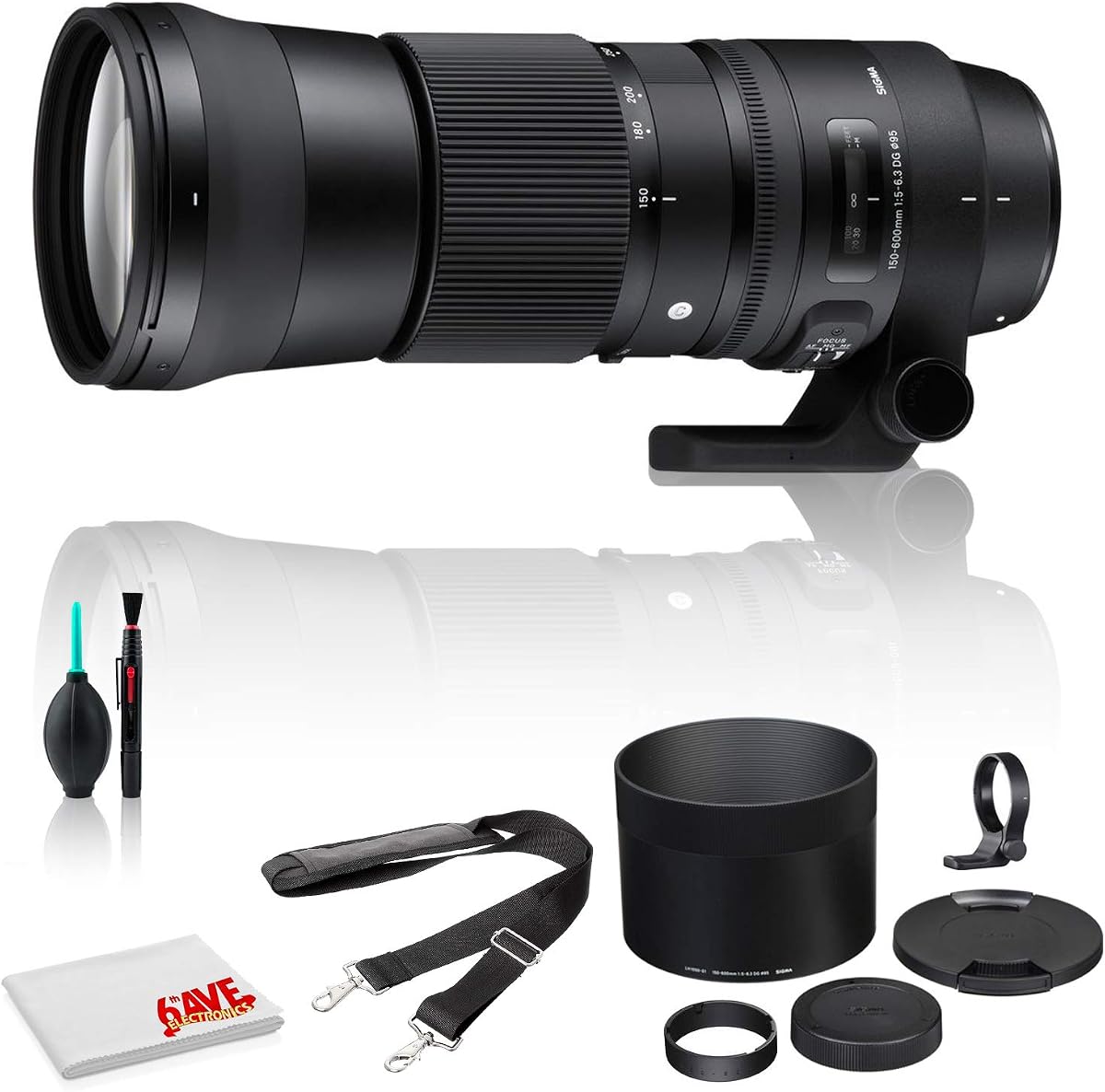
Sigma 150-600mm f/5-6.3 DG OS HSM Contemporary Lens
4.5Editor score
Advanced optical elements
Hyper Sonic Motor AF
Optical Stabilizer
This guide compares the top ten camera lenses for long distance wildlife photography, evaluating zoom range, stabilization, and optical quality for nature
Capturing wildlife from a safe distance requires powerful optics that bring distant subjects closer without sacrificing image quality. A good lens offers sharp focus, reliable stabilization, and a focal range that adapts to various environments and animal behaviors.
We evaluated ten top-rated lenses based on optical performance, autofocus speed, build quality, and value for money. Each product was assessed for its ability to handle challenging lighting and fast-moving subjects while remaining practical for field use.
Every pick highlights key strengths and limitations to help you choose the right tool for your needs. Note that prices and availability change frequently, so check current listings before purchasing to ensure you get the best deal.
4.5Editor score
4.7Editor score
4.0Editor score
This side-by-side comparison highlights key specifications and performance traits across all ten selected lenses to help you identify the best fit for your wildlife photography goals.


This lens earns top marks for its unmatched zoom flexibility and reliable performance in the field. With a range spanning 200mm to 800mm, it delivers exceptional reach for distant subjects while maintaining a relatively compact form factor.
We may earn a commission when you buy through this link, at no additional cost to you.
The built-in image stabilization ensures sharp images even at maximum focal lengths, making handheld shooting feasible in many situations. The USM autofocus system is both fast and quiet, allowing you to track moving wildlife without startling them.
While the investment is significant compared to other options, the optical quality and versatility justify the cost for serious enthusiasts. Users may find the aperture narrows at long range, but modern sensors handle low light well with high ISO settings.
Ideal for wildlife and bird photographers seeking a single versatile lens, this bundle offers everything needed to start capturing detailed shots immediately. Its balance of power and portability makes it a standout choice for outdoor adventures.
The 800mm telephoto end brings distant animals into clear view without compromising image quality or detail resolution.
Built-in stabilization counters camera shake effectively, enabling sharp handheld shots even at extreme focal lengths.
We may earn a commission when you buy through this link, at no additional cost to you.
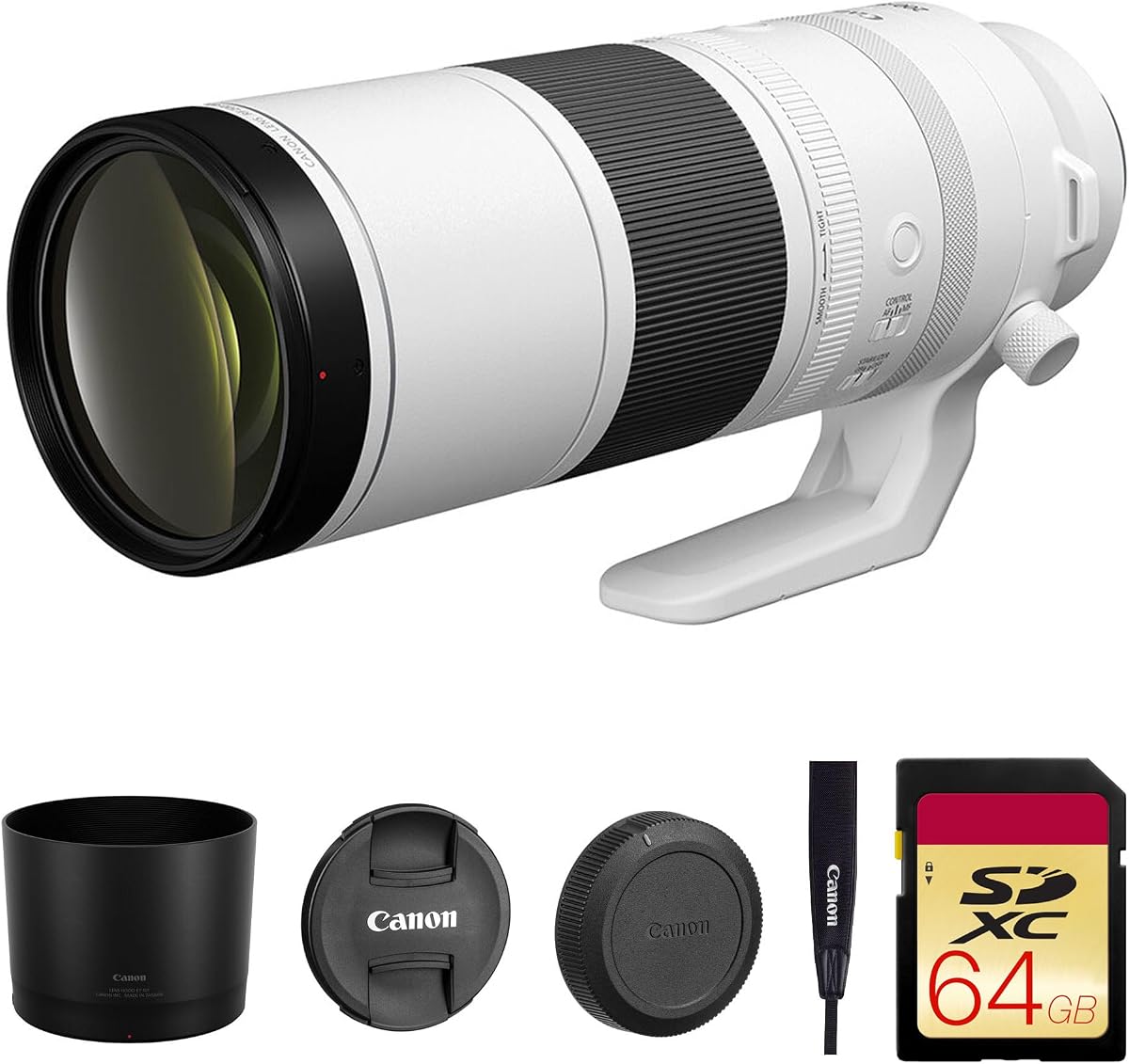
This lens stands out as the world's first AF super-telephoto zoom with an 800mm reach, offering groundbreaking capabilities for mirrorless users. Its design prioritizes mobility without sacrificing optical clarity across the entire zoom range.
We may earn a commission when you buy through this link, at no additional cost to you.
Compatibility with extenders allows even greater reach when needed, while the lightweight construction reduces fatigue during long shoots. The optical design leverages the RF mount to maintain high quality, ensuring sharp images at every focal length.
Some users might prefer more manual control over focus, but the autofocus performance is generally robust for wildlife scenarios. The lens excels in portability, making it a strong contender for travel and field work.
For Canon RF users seeking ultimate flexibility and power, this lens delivers professional-grade results in a manageable package. It is well-suited for nature and sports photographers who need reliable performance in varied conditions.
This lens sets a new standard with its combination of AF capability and 800mm reach in a compact form.
Works seamlessly with RF extenders to push reach further while preserving autofocus functionality at all lengths.
We may earn a commission when you buy through this link, at no additional cost to you.
Sigma's Contemporary series lens combines high optical performance with practical design for Canon EF mount users. The inclusion of low dispersion elements ensures minimal chromatic aberration, delivering crisp images even at extreme zoom levels.
We may earn a commission when you buy through this link, at no additional cost to you.
The Hyper Sonic Motor provides quick and silent autofocus, while the Optical Stabilizer helps maintain sharpness in low light or handheld scenarios. A standard bundle includes a cleaning kit, adding value for field maintenance.
Though slightly heavier than newer RF lenses, the balance and build quality feel professional and durable. Some users note that autofocus can be less responsive in very low light compared to premium alternatives, but it remains reliable overall.
This lens is a top choice for photographers seeking premium optics at a competitive price. Its combination of reach, clarity, and stabilization makes it a versatile tool for wildlife and nature photography.
FLD and SLD elements reduce color fringing, ensuring high contrast and accurate colors throughout the zoom range.
Includes essential accessories like a cleaning kit, making it ready for outdoor use right out of the box.
We may earn a commission when you buy through this link, at no additional cost to you.
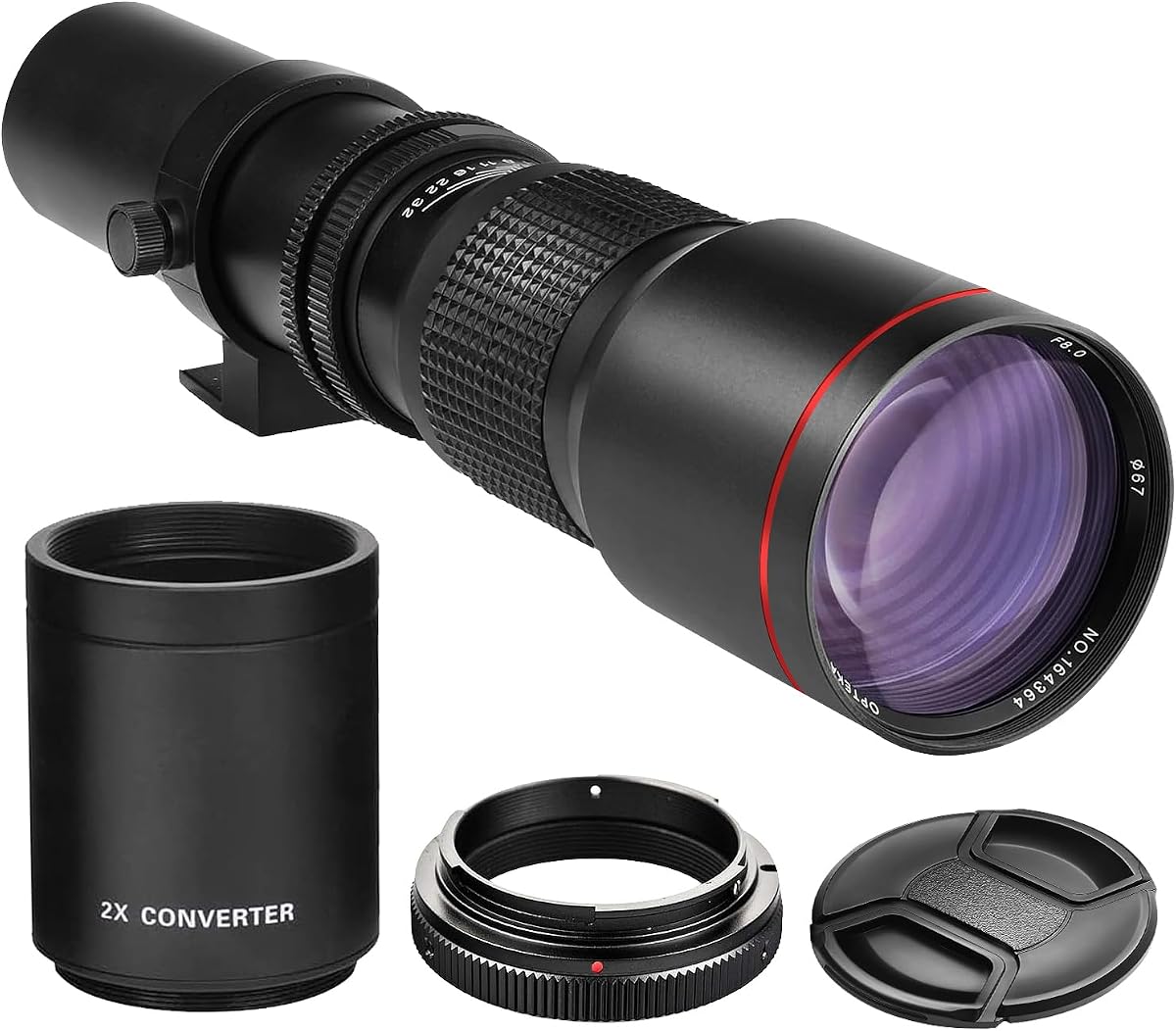
This manual lens offers remarkable reach at an entry-level price point, making long-distance wildlife photography accessible to beginners. Its 1000mm capability with the included teleconverter allows for extreme magnification of distant subjects.
We may earn a commission when you buy through this link, at no additional cost to you.
Manual focus and aperture give you complete creative control, though it requires patience and steady handling. The lens is built to withstand outdoor conditions, with a robust finish that resists wear during travel and field use.
Performance varies depending on user skill, as sharpness depends heavily on stable support and precise focus adjustments. The narrow f/8 aperture limits low-light performance, so daytime use is recommended for best results.
Ideal for budget-conscious photographers willing to trade automation for reach, this lens provides surprising versatility. It is a practical tool for learning telephoto techniques without a significant financial commitment.
The 2X teleconverter doubles power to 1000mm, bringing subjects closer than most affordable lenses can achieve.
Full manual operation allows fine-tuning of shots for unique compositions and artistic expression.
We may earn a commission when you buy through this link, at no additional cost to you.
This L-series lens has long been a favorite among professionals for its reliable optical performance and sturdy build. The inclusion of fluorite and UD elements minimizes aberrations, ensuring high contrast and sharp images across the zoom range.
We may earn a commission when you buy through this link, at no additional cost to you.
The ring-type USM autofocus delivers fast and quiet focus, while optical stabilization helps maintain clarity in challenging conditions. A removable tripod collar allows balanced support, and the bundle includes a filter kit for immediate use.
While heavier than newer mirrorless options, its handling is refined and suitable for extended field sessions. Some users might prefer the broader reach of modern super-telephoto lenses, but this offers excellent versatility for varied distances.
For EF mount users seeking dependable quality and professional features, this lens remains a solid investment. Its balance of optics, speed, and durability makes it a reliable companion for wildlife and action photography.
Fluorite and UD elements ensure precise focus and clarity, even when shooting in challenging lighting conditions.
Removable rotating tripod collar enables comfortable vertical and horizontal shooting for stable long-range framing.
We may earn a commission when you buy through this link, at no additional cost to you.
Offering an impressive 420mm to 1600mm zoom range, this manual lens provides extreme reach for distant wildlife at an accessible price. The included 2X teleconverter enables photographers to capture subjects that would otherwise remain out of reach.
We may earn a commission when you buy through this link, at no additional cost to you.
Designed for EF-mount cameras, it ensures easy integration with many DSLR models. The f/8.3 aperture ensures clear images in bright conditions, though low-light performance is limited by manual focus constraints.
Users must rely on steady support and precise manual adjustments for sharp results. The lens is built for durability and offers a unique opportunity to experiment with extreme telephoto photography without high costs.
Best for hobbyists and learners seeking maximum reach, this lens encourages skill development in manual focus techniques. It delivers clear detailed photos when used correctly, making it a compelling option for budget-conscious explorers.
The 1600mm capability brings distant wildlife and landscapes into view with remarkable clarity for budget shooters.
Manual focus provides complete control over depth and composition for creative wildlife shots.
We may earn a commission when you buy through this link, at no additional cost to you.
This compact RF lens is an excellent choice for photographers seeking portable telephoto power without excessive weight. Its optical image stabilizer provides up to 5.5 stops of correction, enhancing handheld shooting versatility.
We may earn a commission when you buy through this link, at no additional cost to you.
The Nano USM system delivers smooth and quiet autofocus, ideal for tracking wildlife quietly. A minimum focusing distance of 2.89 feet allows close-up shots, while the zoom range covers versatile focal lengths for various subjects.
While the maximum focal length is shorter than super-telephoto options, its balance and usability make it suitable for many scenarios. Users should expect slightly reduced performance in low light due to the f/5.6-8 aperture range.
For travel and casual wildlife photography, this lens offers a practical combination of quality and portability. It is well-suited for EOS R users who prioritize ease of use and reliable performance in the field.
5.5 stops of shake correction enables sharp handheld images in a range of conditions.
Fast and quiet autofocus ensures you never miss fleeting wildlife moments.
We may earn a commission when you buy through this link, at no additional cost to you.
As one of the most affordable telephoto options, this lens provides a straightforward way to explore zoom photography. Its smooth zoom mechanism and lightweight design make it accessible for beginners and casual shooters.
We may earn a commission when you buy through this link, at no additional cost to you.
With a focal range of 75-300mm, it offers moderate reach suitable for closer wildlife subjects. However, the lack of image stabilization means steady hands or a tripod are essential to avoid blur, especially in low light.
The lens is well-built for its class and provides a reliable introduction to telephoto work. While it lacks advanced features found in higher-end models, its simplicity and low cost make it a practical starting point.
Ideal for hobbyists or those testing interest in wildlife photography, this lens delivers decent performance for everyday use. It is best paired with bright conditions to compensate for the absence of stabilization.
This lens provides a low-cost way to experience telephoto zoom without complicated settings.
Improved mechanism ensures smoother framing transitions, enhancing the shooting experience.
We may earn a commission when you buy through this link, at no additional cost to you.
This lens is a strong contender for Nikon users seeking extended reach with reliable autofocus performance. The 200-500mm range with a constant f/5.6 aperture ensures consistent exposure across zooms, supported by VR stabilization.
We may earn a commission when you buy through this link, at no additional cost to you.
The Silent Wave Motor enables fast, accurate focus, and a Sport mode aids tracking moving subjects. A bundle includes a filter kit and cleaning accessories, offering added value for field use.
While weight can be a consideration during long shoots, the rotating tripod collar helps balance the lens comfortably. Users should note compatibility differences between FX and DX sensors, which affect equivalent reach.
For Nikon shooters prioritizing reach and performance, this lens delivers compelling results at a reasonable price. It is well-suited for wildlife enthusiasts who value durability and consistent optical performance.
A steady f/5.6 max aperture maintains exposure consistency across the entire zoom range.
Up to 4.5 stops of stabilization help capture sharp images handheld even at long focal lengths.
We may earn a commission when you buy through this link, at no additional cost to you.
This renewed version of the popular entry-level telephoto lens offers a cost-effective way to access 300mm reach. Inspected and tested for quality, it provides reliable performance without the price of a new unit.
We may earn a commission when you buy through this link, at no additional cost to you.
The DC motor focuses efficiently for the price class, and the lightweight build makes it easy to carry. Users should expect the same features as the standard model, including smooth zooming and compact dimensions.
While lacking stabilization, it remains a practical option for bright conditions or tripod use. It is an excellent choice for those seeking value and simplicity in their first telephoto lens purchase.
For budget photographers wanting to experiment with zoom, this renewed lens delivers proven performance at a fraction of the cost. It balances affordability and usability well for casual wildlife and nature shots.
Inspected and tested renewed lenses offer reliable quality at reduced prices for budget-conscious buyers.
Lightweight design ensures easy transport for outdoor shoots without added bulk or fatigue.
We may earn a commission when you buy through this link, at no additional cost to you.
Selecting the right wildlife lens requires understanding key factors that impact performance and usability. This guide outlines the most important considerations to help you make an informed decision.
Focal length determines how much magnification a lens provides. For wildlife, ranges above 200mm are typically necessary to capture distant animals without disturbing them. Super-telephoto lenses starting at 400mm or more offer greater reach for shy species.
Consider your typical shooting distance and choose a range that balances reach with portability.
A wider aperture lets in more light, improving performance in low-light conditions and enabling faster shutter speeds. Many super-telephoto lenses have narrower maximum apertures, which can require higher ISO settings or better lighting.
Prioritize lenses with wider apertures if you often shoot in early morning or late afternoon light.
Stabilization is essential for handheld shooting at long focal lengths where camera shake is amplified. Look for lenses with effective IS systems rated in stops of correction to ensure sharp images.
If your camera lacks in-body stabilization, a lens with optical stabilization becomes even more critical.
Fast and accurate autofocus is vital for tracking moving wildlife. Technologies like USM or Silent Wave Motor provide quick focus acquisition and quiet operation to avoid startling subjects.
Ensure the lens supports continuous AF modes for action tracking during active scenes.
Outdoor photography exposes gear to dust, moisture, and rough handling. Lenses with weather-sealed construction and durable materials will perform better under challenging conditions.
Choose lenses with robust housing and reliable internal mechanisms for long-term use in the field.
Telephoto lenses can become heavy and bulky, affecting portability and comfort during long hikes. Lightweight designs reduce fatigue but may trade off some optical quality or features.
Balance weight against performance based on how often you plan to carry your gear on foot.
Ensure the lens fits your camera’s mount system, whether DSLR or mirrorless. Some lenses are optimized for specific mounts, affecting performance and autofocus speed.
Check compatibility lists or consult your camera manual before purchasing to avoid adapter issues.
Prices vary widely from budget manual lenses to professional-grade optics. Determine how much you can spend while prioritizing essential features like stabilization and autofocus.
Consider refurbished or older models to save money without sacrificing critical performance.
When shooting wildlife, use a tripod or monopod to stabilize the lens at long focal lengths. This reduces camera shake and helps maintain sharp images, especially in low light.
Keep your lens clean with a soft brush and lens cloth to remove dust or moisture. Avoid touching glass surfaces directly to prevent smudges that can affect image quality.
Store lenses in a dry, cool place with caps on to protect against scratches and environmental damage. Regularly check focus and zoom mechanisms to ensure smooth operation during use.
A focal length of at least 300mm is recommended for most wildlife photography. Lenses with 400mm to 800mm range offer superior reach for distant animals without disturbing them.
Yes, image stabilization is highly recommended for handheld shooting at long focal lengths. It helps counteract camera shake and ensures sharper images, particularly in lower light conditions.
Many DSLR lenses can be used on mirrorless cameras with adapters, though performance may vary. RF or Z mount lenses optimized for mirrorless systems typically offer faster autofocus and better integration.
EF lenses are designed for Canon DSLRs, while RF lenses are optimized for mirrorless cameras. RF lenses are generally lighter and offer faster communication with the camera body.
Manual lenses can be useful for budget-conscious photographers who prefer full creative control. However, they lack autofocus, making them harder to use for fast-moving subjects.
Use a soft brush to remove dust, then gently wipe the glass with a microfiber cloth. Avoid harsh chemicals and store the lens in a dry case when not in use.
The top picks for long distance wildlife photography range from premium Canon RF super-telephotos to budget manual options, each offering distinct strengths for different needs and budgets.
Prioritize focal length, stabilization, and autofocus speed when evaluating lenses. These factors directly impact your ability to capture sharp, detailed images of distant wildlife in varied conditions.
Always check current prices and availability before purchasing, as product listings and deals change regularly. Investing in the right lens will enhance your photography and bring you closer to nature’s hidden moments.