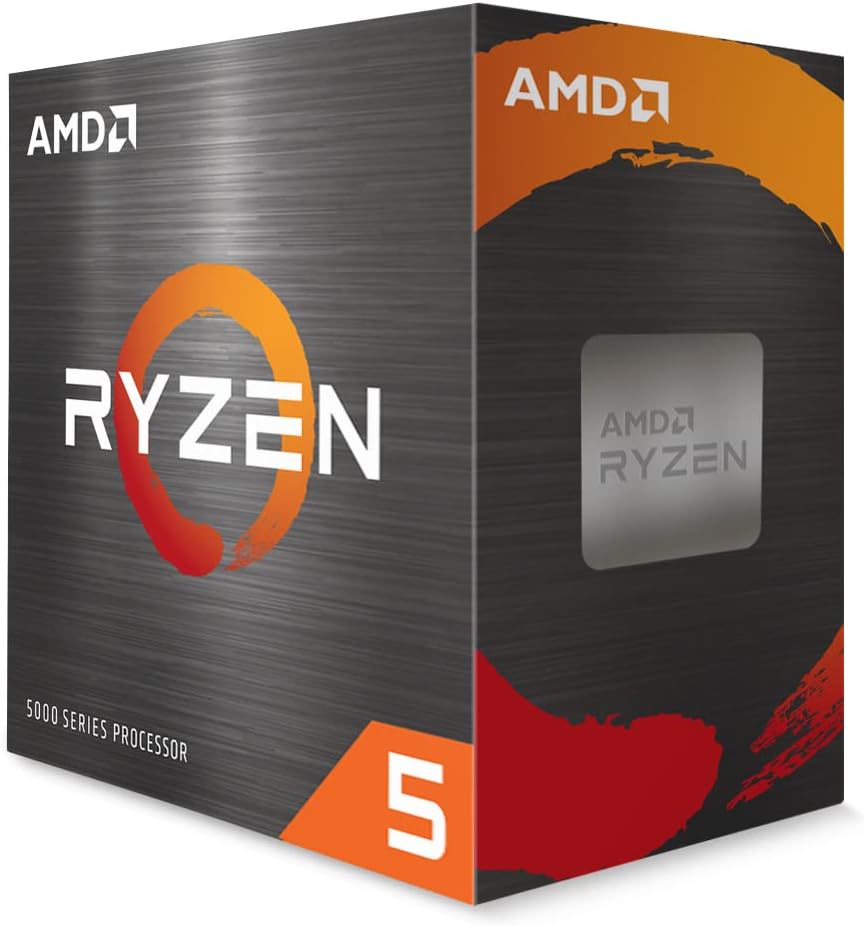
AMD Ryzen 5 5500
4.7Editor score
6 cores 12 threads
Includes Wraith Stealth Cooler
Affordable entry-level price
This guide compares the top CPUs for Excel and Data Analysis, highlighting performance features for spreadsheet and dataset workloads.
Choosing the right CPU for Excel and Data Analysis ensures smooth performance when handling large spreadsheets and complex computations. Modern processors offer varying core counts and clock speeds that directly impact calculation times and multitasking efficiency.
We evaluated ten top-rated processors based on architecture, cache size, and core configuration. Each product was assessed for its ability to handle data-intensive tasks while maintaining power efficiency and system stability under load.
Each pick below shows key specifications and user ratings to help you decide quickly. Prices and availability change often, so verify current details before purchasing to ensure you get the best value for your specific workload needs.
4.7Editor score

4.8Editor score

4.8Editor score
The following table provides a side-by-side comparison of all ten processors to help you visualize differences in core counts, cache sizes, and key architectural features.


The Intel Core Ultra 9 285K stands as the top choice for professionals managing massive datasets. With a 4.6 rating and 24 cores, it delivers outstanding speed for complex calculations and simultaneous application use.
We may earn a commission when you buy through this link, at no additional cost to you.
Its Performance Hybrid Architecture prioritizes workloads efficiently. P-cores handle active data tasks while E-cores manage background processes. The 40MB cache ensures rapid data retrieval, reducing latency during heavy Excel macro runs.
While powerful, this CPU demands a robust cooling solution and compatible motherboard. The unlocked frequency allows fine-tuning but increases heat output. Ensure your system has adequate airflow and power delivery for stable operation.
Ideal for data analysts and engineers who need maximum throughput. If you process terabytes of data daily or run heavy simulation models, this processor ensures minimal wait times. Invest in quality cooling to maximize its potential.
P-cores and E-cores work together to balance performance and power consumption, optimizing workload distribution automatically.
Turbo Boost Max Technology 3.0 directs critical tasks to the fastest cores for unmatched single-thread speed.
We may earn a commission when you buy through this link, at no additional cost to you.
The AMD Ryzen 7 9800X3D is a powerhouse for single-thread heavy workloads. Its 4.8 rating reflects consistent reliability. The Zen5 architecture with 96MB L3 cache makes it ideal for Excel formulas and data sorting tasks.
We may earn a commission when you buy through this link, at no additional cost to you.
Cache size reduces data fetch times significantly. With 16 threads, it handles multitasking smoothly. The architecture delivers high IPC, meaning more instructions per clock cycle. This translates to faster processing for complex spreadsheet macros and pivot tables.
However, cooling needs are significant. The package does not include a cooler. To maintain boost clocks, invest in a high-end liquid cooler. Ensure your case supports AM5 motherboard dimensions for proper fit and airflow.
Choose this if you prioritize raw speed over core count. For financial modeling or rapid data processing, it excels. It is a premium choice for enthusiasts who need quick responses without waiting for long compute cycles.
3D V-Cache technology increases L3 cache to reduce latency and boost performance for data-heavy tasks.
Next-generation design improves instruction execution rates for smoother workflow and faster calculations.
We may earn a commission when you buy through this link, at no additional cost to you.
The Intel Core i9-14900K offers the highest clock speeds among general processors. With a 4.2 rating, it is reliable for intensive tasks. Its 32 threads handle parallel data processing effortlessly for heavy enterprise spreadsheets.
We may earn a commission when you buy through this link, at no additional cost to you.
The hybrid architecture divides tasks between P and E cores. This optimization ensures background processes do not slow down active Excel calculations. The 6.0 GHz boost frequency provides rapid responsiveness when opening large files or running macros.
Power consumption is a trade-off. It draws significant power and generates heat. Proper airflow and thermal paste are essential to prevent throttling. Without adequate cooling, performance may drop below peak ratings during extended sessions.
Best suited for power users needing speed and core versatility. If you balance data analysis with other resource-heavy apps like virtual machines, this CPU delivers consistent results. Ensure your motherboard BIOS is updated for optimal stability.
Turbo Boost reaches 6.0 GHz to minimize latency during single-threaded data processing tasks.
Works with 600 and 700 series chipsets for flexible system building options.
We may earn a commission when you buy through this link, at no additional cost to you.
The AMD Ryzen 5 9600X combines speed and efficiency effectively. Its 4.8 rating indicates reliable performance for daily data tasks. With 6 cores and 12 threads, it manages moderate datasets and background apps comfortably.
We may earn a commission when you buy through this link, at no additional cost to you.
Zen5 architecture enables high IPC and power efficiency. The 38 MB cache improves data locality for spreadsheet calculations. DDR5-5600 support ensures memory bottlenecks are minimized during large file operations or pivot table refreshes.
Cooling is not included. Ensure you have an aftermarket solution ready for optimal performance. While not the highest core count, its speed compensates for typical office workflows. It supports AM5 for future upgrades.
Perfect for small business users or analysts needing reliability without overspending. It balances cost and performance better than most. If you need speed now and upgrades later, this is a strategic investment for your workstation.
New design improves instruction efficiency for faster data processing and smoother multitasking.
DDR5-5600 support minimizes latency for faster spreadsheet data retrieval and calculation.
We may earn a commission when you buy through this link, at no additional cost to you.
The Intel Core Ultra 7 270K is a versatile processor for professional data work. With a 4.7 rating, it handles complex Excel macros and data sorting smoothly. It features 24 cores for multitasking and parallel processing.
We may earn a commission when you buy through this link, at no additional cost to you.
Its hybrid architecture assigns tasks dynamically to maximize efficiency. P-cores handle heavy computations while E-cores manage background tasks. The 5.5 GHz boost frequency ensures responsive performance. LGA1851 provides a modern platform for DDR5 speeds.
Thermal design power peaks at 250W under load. You need a high-quality cooling system to sustain speeds. This CPU is unlocked for tuning if you want to optimize performance further. Ensure your motherboard supports 800 series chipsets.
Ideal for creators and analysts needing both speed and multitasking. It fits mid-to-high budget builds. If you run multiple apps alongside Excel, it ensures smooth operation. Verify BIOS compatibility before purchase to avoid boot issues.
Compatible with 800 series chipsets and LGA1851 socket for future memory and PCIe upgrades.
Engineered with high power limits to sustain intensive workloads without immediate throttling.
We may earn a commission when you buy through this link, at no additional cost to you.
The AMD Ryzen 9 9950X offers top-tier multi-threaded performance. Its 4.8 rating reflects consistent high-speed data handling. With 16 cores and 32 threads, it excels at parallel data processing for large datasets and simulations.
We may earn a commission when you buy through this link, at no additional cost to you.
Cache size helps reduce latency during repeated calculations. The Zen5 architecture ensures high efficiency. You can unlock frequencies for tuning. The AM5 platform supports DDR5 memory speeds for improved data throughput during complex queries.
It requires a robust cooling setup. Liquid cooling is recommended to prevent thermal throttling. The price is high, but justified for heavy workloads. Ensure your motherboard BIOS supports 9000 series for full performance unlock.
Best for enterprise analysts and power users. If you process terabytes of data daily, it reduces wait times significantly. It is a solid long-term investment. Verify compatibility with your existing cooling solution before purchase.
32 threads enable parallel data processing for faster simulation and calculation tasks.
80MB cache reduces memory latency for quick data retrieval during complex operations.
We may earn a commission when you buy through this link, at no additional cost to you.
The Intel Core i7-12700KF delivers strong performance for its class. A 4.7 rating shows reliability in office environments. With 8 P-cores and 4 E-cores, it handles daily Excel tasks efficiently without excessive power draw.
We may earn a commission when you buy through this link, at no additional cost to you.
The hybrid architecture prioritizes critical threads. Cache sizes ensure quick data access for spreadsheets. It supports LGA1700 for broad motherboard options. 125W base power allows for decent overclocking headroom if paired with strong cooling.
Thermal performance is good but requires attention. Do not run it without airflow. BIOS updates may be needed for best performance. While not the latest, it remains a cost-effective option for standard data analysis needs.
Great for small offices needing stability. It balances cost and performance well. If you manage moderate datasets, it provides smooth operation. Ensure your power supply meets requirements before installation for stable performance.
Hybrid P and E cores optimize task distribution for balanced performance and power usage.
LGA1700 socket provides wide motherboard compatibility for flexible system upgrades.
We may earn a commission when you buy through this link, at no additional cost to you.
The Intel Core i5-14400F is a budget-friendly choice. A 4.8 rating shows high reliability for typical data tasks. With 6 P-cores and 4 E-cores, it handles multiple Excel sheets and background apps smoothly.
We may earn a commission when you buy through this link, at no additional cost to you.
Hybrid architecture distributes workloads to reduce lag. The 20MB cache speeds up repetitive calculations. It supports DDR5 for faster memory. A thermal solution is included, but better aftermarket cooling helps performance during heavy loads.
Discrete graphics is required. Ensure your system has a GPU. Boost speed caps at 4.7 GHz. While not the fastest, it offers excellent value. It is a great option for small businesses upgrading their workstation.
Ideal for general office tasks and light analysis. It saves money without sacrificing much speed. If you do not need extreme multi-threading, it is a smart choice. Ensure your motherboard supports 600 or 700 series for full features.
Combines performance and efficiency cores to optimize task routing and power usage.
Supports DDR4 and DDR5 memory for flexible system building and upgrades.
We may earn a commission when you buy through this link, at no additional cost to you.
The AMD Ryzen 9 9900X balances speed and threads well. A 4.8 rating reflects solid performance in daily usage. With 12 cores and 24 threads, it handles large Excel sheets and parallel calculations effectively.
We may earn a commission when you buy through this link, at no additional cost to you.
Zen5 architecture boosts IPC and efficiency. The 76 MB cache reduces data fetch times. Boost clocks reach 5.6 GHz for responsive processing. AM5 platform ensures future support. Unlocked for tuning if you need extra performance.
Cooler is not included. Plan for aftermarket cooling. DDR5 memory is mandatory for peak speed. It handles heavy workloads without thermal throttling if cooled properly. Verify motherboard compatibility for full BIOS support.
Best for analysts needing high single-thread and multi-thread balance. It handles complex formulas and data modeling well. Verify power supply capacity. It is a solid choice for workstation builds focused on productivity and speed.
12 cores and 24 threads enable efficient multitasking and parallel data processing.
Up to 5.6 GHz boost ensures responsive performance during complex calculations.
We may earn a commission when you buy through this link, at no additional cost to you.
The AMD Ryzen 5 5500 is a budget option for basic data tasks. A 4.7 rating confirms reliability. With 6 cores and 12 threads, it handles moderate Excel sheets and basic macros without struggle.
We may earn a commission when you buy through this link, at no additional cost to you.
Includes Wraith Stealth Cooler for immediate use. It runs cool enough for light loads. DDR4 support keeps costs low. Unlocked for tuning if you want to optimize clock speeds. AM4 socket offers wide motherboard support.
Max boost speed is lower at 4.2 GHz. It may struggle with massive datasets compared to newer models. Ensure you have enough RAM to reduce CPU load. A discrete GPU is required for display output.
Perfect for entry-level analysts or students. It balances cost and capability well. If you process small datasets, it is efficient. Verify motherboard BIOS for stability. It is a great budget entry into data workflows.
Includes Wraith Stealth cooler for immediate use without extra hardware costs.
Socket AM4 offers broad motherboard compatibility for flexible and affordable builds.
We may earn a commission when you buy through this link, at no additional cost to you.
Selecting the right CPU requires balancing core count, clock speed, and platform longevity for your specific workload.
More cores allow simultaneous processing of multiple threads. For heavy Excel macros or data sorting, 12 cores or more is ideal.
Choose high core counts if you run background tasks alongside data analysis to maintain system responsiveness.
Higher boost frequencies improve single-thread performance. Excel formulas and calculations often rely on single-thread speed.
Look for boost speeds above 4.5 GHz to ensure quick calculations and reduced lag during complex operations.
Cache memory stores frequently accessed data. Larger L3 cache reduces latency for repetitive calculations and pivot tables.
Aim for processors with 30MB cache or more to keep frequently used data readily available to the CPU.
Ensure the CPU matches your motherboard socket. LGA1700, AM5, and LGA1851 are current standards for modern builds.
Select a platform with long-term support to ensure future upgrades remain possible without replacing the entire board.
High-performance CPUs generate significant heat. Invest in quality cooling solutions like liquid coolers or large air coolers.
Proper cooling prevents thermal throttling and maintains consistent performance during extended calculation sessions.
DDR5 memory offers higher bandwidth. It improves throughput for large datasets and complex queries.
Verify that your CPU supports DDR5 if you plan to handle large files or multiple applications simultaneously.
Efficient architectures reduce power consumption. This is important for workstations running 24/7 or in hot environments.
Look for CPUs with optimized TDP ratings to ensure stable operation without excessive power draw or heat.
Choose a CPU with upgrade paths. Newer architectures support PCIe 5.0 and better memory speeds for years.
Investing in newer platforms ensures longevity and avoids frequent replacement as data demands grow over time.
Install the CPU carefully into the socket ensuring pins are not bent. Apply thermal paste evenly to the top of the CPU before attaching the cooler.
Keep your system clean from dust. Use compressed air to clean fans and heatsinks regularly to prevent overheating during heavy data processing.
Update your BIOS to ensure compatibility with newer cores. Check for firmware updates from your motherboard manufacturer for stable performance.
The AMD Ryzen 7 9800X3D or Intel Core i9-14900K are excellent choices. They offer high boost clocks and sufficient cache for rapid formula processing and pivot table refreshes.
Not necessarily. Budget options like the Ryzen 5 5500 or Intel i5-14400F handle basic tasks well. Save resources for more complex workloads if your daily work is simple.
Core count helps with parallel tasks. Excel uses more single-thread for calculations but benefits from extra cores for background multitasking and macros running simultaneously.
DDR5 is recommended for large datasets. It provides higher bandwidth which reduces data retrieval time. DDR4 is acceptable for smaller spreadsheets but DDR5 is better for scaling.
Yes if your motherboard supports the newer sockets. AM5 and LGA1851 offer long-term upgrade paths. Check BIOS updates before upgrading to ensure compatibility.
High-end CPUs like the Ryzen 9 or Intel Ultra series need strong cooling. Liquid cooling or large air coolers are recommended to maintain boost clocks under load.
The processors listed here range from budget to premium. Each offers distinct strengths for Excel and data workloads. Choose based on your balance of cost and performance needs.
Prioritize core count and cache size for heavy analysis tasks. High boost speeds also help reduce wait times. Ensure your cooling matches the CPU's thermal requirements.
Prices change frequently. Always check current pricing before purchasing to ensure you get the best value for your specific requirements and system compatibility.