
SVBONY SV550 AP0 Telescope
4.5Editor score
Triplet apochromatic optics
Air-spaced triple design
2.5-inch dual-speed focus
This guide compares the top apochromatic refractors for astrophotography and visual astronomy. We review optics, portability, and value to help you find the
Apochromatic refractors are premium telescopes designed to eliminate color fringing and deliver crisp, high-contrast images of celestial objects. Their specialized optics make them ideal for both visual observation and astrophotography.
We analyzed ten top-rated models based on optical quality, build materials, focal ratios, and included accessories. Our comparison highlights strengths for different needs, from portable viewing to advanced imaging setups.
Each pick shows key specs, pros, and cons to help you decide. Note that availability and pricing can change quickly, so check current listings before making your final purchase decision.
4.5Editor score

4.9Editor score

5.0Editor score
The following table offers a side-by-side overview of all ten reviewed apochromatic refractors. It highlights critical specifications like aperture, focal ratio, and unique features to streamline your selection process.


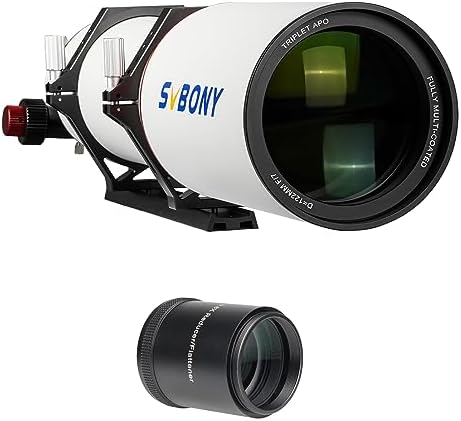


The SVBONY SV550 AP0 ranks as our top pick for value, offering an air-spaced triplet apochromatic design that eliminates color fringing. It earns a 4.5-star rating for its bright, high-contrast images.
We may earn a commission when you buy through this link, at no additional cost to you.
Its optics use S-FPL51 low-dispersion glass with two correction elements to fix blue-edge aberration common in single-ED scopes. The magnesium alloy dual-speed focuser reduces weight and improves portability.
While the optical performance is stellar, the scope lacks a built-in field flattener, which may require additional purchases for full-frame astrophotography. Extinction barriers inside reduce stray light effectively.
This scope suits visual observers and beginners transitioning to imaging who want true color performance without overspending. We recommend it for anyone targeting Messier objects like the Orion Nebula.
The triplet structure virtually eliminates chromatic aberration, delivering bright images with minimal color halos around stars.
Magnesium alloy components reduce weight significantly compared to aluminum, making it easier to handle during long sessions.
We may earn a commission when you buy through this link, at no additional cost to you.
The Explore Scientific ED80 is renowned for its FCD1 HOYA extra-low dispersion glass and proprietary coatings that enhance clarity. It has a 4.2-star rating among users.
We may earn a commission when you buy through this link, at no additional cost to you.
Its air-spaced triplet design allows users to capture sharp images of the Moon and planets. The front cell features push-pull adjustments for precise collimation to get the tightest stars.
The scope is designed with portability in mind, featuring a 480mm focal length that fits compactly. However, the weight might be a consideration for travelers seeking lighter setups.
We recommend this telescope for visual observers who value USA-based support and precise collimation tools. It is also great as a guidescope for larger imaging systems.
Genuine FCD1 HOYA glass combined with enhanced multi-layer coatings produces stunning details and excellent color fidelity.
The front cell includes push-pull adjustments to ensure optical alignment is optimized for the best possible star performance.
We may earn a commission when you buy through this link, at no additional cost to you.
This bundle combines the excellent SV550 OTA with the SV209 field flattener, earning a perfect 5.0-star rating for its imaging readiness. It targets deep sky astrophotography needs.
We may earn a commission when you buy through this link, at no additional cost to you.
The 45mm large target surface supports both half-frame and full-frame cameras, ensuring flat fields across the sensor. The magnesium alloy focus seat reduces weight by over 20 percent.
While the optics perform brilliantly, attaching the flattener requires careful attention to back focal length, which can be challenging for newcomers. The 180mm dovetail plate offers versatility for accessories.
We suggest this bundle for astrophotographers needing a complete setup right out of the box. The combination of optical quality and included correction is hard to beat.
The included SV209 field flattener corrects curvature, delivering sharp stars to the corners of full-frame sensors.
Magnesium focus seat reduces overall weight significantly, making the scope easier to balance on lighter mounts.
We may earn a commission when you buy through this link, at no additional cost to you.
The SVBONY SV550 122mm offers a significant jump in light-gathering power with its 122mm aperture. It scores a 5.0 rating for clarity and detail in deep sky objects.
We may earn a commission when you buy through this link, at no additional cost to you.
Its FPL-51 triplet structure uses one ED glass piece to reduce chromatic aberration effectively. The SV211 dovetail base with a handle makes moving this larger telescope easier.
While the larger aperture reveals fainter targets, it weighs 6.44kg, which requires a sturdy equatorial mount for stability. This weight can limit portability compared to smaller 80mm models.
We recommend this scope for those prioritizing light collection in a refractor form. It is ideal for deep sky imaging and visual observers seeking higher magnitude limits.
The 122mm aperture gathers significantly more light than 80mm rivals, revealing fainter deep sky objects clearly.
The integrated handle on the dovetail base simplifies transport, making setup easier despite the larger size.
We may earn a commission when you buy through this link, at no additional cost to you.
The Askar 71F is a marvel of portability, weighing only 2.5kg with its Vixen dovetail plate. It boasts a 4.9-star rating for its self-flattened quadruplet design.
We may earn a commission when you buy through this link, at no additional cost to you.
Its air-spaced quadruplet lens ensures field flatness without extra accessories. The focus can rotate 360 degrees for easy composition without rotating the whole tube.
While lightweight, the 71mm aperture is less powerful for faint deep sky objects compared to 100mm scopes. However, it excels at planetary and wide-field imaging due to its speed.
We recommend this telescope for travelers needing a compact setup. Its versatility for both visual and photographic use makes it a standout for its size.
The quadruplet design acts as a built-in field flattener, saving money and weight for imaging setups.
At 2.5kg, this is one of the lightest APOs available, perfect for backpacking or air travel to dark sites.
We may earn a commission when you buy through this link, at no additional cost to you.
The SVBONY SV503 features a generous 102mm aperture and S-FPL51 ED glass that minimizes color fringing. It holds a 4.8-star rating for its performance.
We may earn a commission when you buy through this link, at no additional cost to you.
Its dual-speed focuser offers 90mm of travel, allowing compatibility with filter wheels and field flatteners. The built-in rotator helps align cameras without twisting the tube.
While the single ED design reduces fringing, it is not as color-free as a triplet. The hood blocks stray light effectively for better viewing in suburban conditions.
We suggest this scope for visual observers wanting a larger aperture. It is a strong choice for planetary viewing and general deep sky observation.
The 90mm travel accommodates heavy accessories like cooling cameras and filter wheels without needing extensions.
The retractable aluminum hood actively blocks light and protects the lens from dew formation during imaging.
We may earn a commission when you buy through this link, at no additional cost to you.
This bundle packages the 122mm F7 APO with a 0.8X focal reducer field flattener. It achieves a 5.0-star rating for its imaging efficiency and quality.
We may earn a commission when you buy through this link, at no additional cost to you.
The SV209 reducer flattens the field, ensuring stars remain sharp at the edges. The 122mm aperture gathers ample light for capturing faint deep sky objects clearly.
The setup is more complex due to the added optics, requiring precise calibration for optimal results. However, the payoff in image quality is worth the effort.
We recommend this kit for serious imagers seeking a complete solution. The combination of aperture and correction tools is perfect for nebula and galaxy targets.
The included focal reducer corrects field curvature and widens the field, streamlining the imaging workflow significantly.
The 122mm aperture captures enough light to reveal faint structures in deep sky objects during long exposures.
We may earn a commission when you buy through this link, at no additional cost to you.
The SVBONY SV550 Kit delivers a premium experience with the 122mm APO and SV209 flattener. It earns a 5.0-star rating for its comprehensive package.
We may earn a commission when you buy through this link, at no additional cost to you.
The kit includes a portable handle and dovetail base, making transport and installation convenient. The optical structure uses FPL-51 glass to reduce aberrations effectively.
While it is a heavy scope at 6.44kg, the carrying case and handle mitigate some of this burden. The SV209 corrects field curvature for flat star fields.
We suggest this for those needing a robust imaging setup. It balances portability with performance, making it a top choice for dedicated hobbyists.
The portable handle and dovetail base simplify movement, making setup faster even with the heavier optics.
The SV209 flattener ensures stars remain round at the edges, critical for high-resolution deep sky imaging.
We may earn a commission when you buy through this link, at no additional cost to you.
This kit pairs the SV550 80mm with the SV209 field flattener, aiming at beginners who want easy astrophotography. It holds a 5.0-star rating.
We may earn a commission when you buy through this link, at no additional cost to you.
The optics feature ultra-wide band multi-layer coatings to prevent reflections and boost contrast. The SV209 improves edge quality on full-frame cameras effectively.
While the bundle simplifies setup, you will need to source a mount and camera separately. The ergonomic handle improves safety during installation and transport.
We recommend this for new imagers seeking a ready-to-shoot OTA. The correction is essential for avoiding common field curvature issues found in beginners scopes.
Ultra-wide band coatings on lenses enhance contrast and reduce internal reflections for sharper images.
The SV209 flattener corrects curvature, ensuring stars stay sharp even at the edges of the frame.
We may earn a commission when you buy through this link, at no additional cost to you.
This ultimate bundle includes the 122mm APO, a guide scope, and the SV905C camera. It earns a 5.0-star rating for being a complete system.
We may earn a commission when you buy through this link, at no additional cost to you.
The camera features a high-sensitivity CMOS sensor with low read noise for tracking faint guide stars. The FPL-51 triplet ensures clear, sharp main images.
While comprehensive, the total weight is substantial, requiring a very stable mount. The guide scope mounts to the main tube for precise tracking.
We recommend this for those wanting an all-in-one astrophotography system. It removes the hassle of sourcing compatible accessories separately for your setup.
The included guide scope and camera allow precise autoguiding, crucial for long-exposure deep sky imaging.
The SV905C camera boasts 80% peak QE and low read noise, enabling tight tracking of even faint guide stars.
We may earn a commission when you buy through this link, at no additional cost to you.
Choosing the right apochromatic refractor requires balancing optical performance with your specific needs. We break down the critical factors to consider.
Aperture determines light-gathering power and resolution. Larger apertures like 122mm reveal fainter objects but increase weight and cost significantly.
For portable travel, 80mm offers a great balance between clarity and ease of use.
APO refractors use triplets or quadruplets with ED glass to eliminate chromatic aberration. Air-spaced designs often provide better thermal performance than cemented ones.
Look for FPL-51 or similar low-dispersion glass for true-to-life color performance.
Focal ratio affects exposure times and field of view. F6 scopes are faster for imaging deep sky targets than slower F7 or F10 models.
Faster scopes reduce exposure time but may require more precise guiding to avoid star trailing.
Weight and size are critical for travel. Lightweight magnesium components and retractable dew shields improve transportability without sacrificing performance.
Ensure your mount can handle the total weight of the scope plus accessories safely.
Dual-speed focusers with 1:10 gearing provide the precision needed for critical focus. Rotators help align cameras without twisting the tube.
A robust focuser also supports heavier imaging trains without flexure issues.
Bundles often include field flatteners or reducers. Check if these match your camera sensor size and required back focus length.
Complete kits can save money but may include items you do not need immediately.
Reputable brands offer warranty and service support. USA-based support can be valuable for resolving optical issues quickly.
Community forums also provide user-driven troubleshooting resources for specific models.
Ensure the scope provides sufficient back focus for your camera and accessories. Some scopes require extension tubes to reach optimal sensor distance.
Field flattener compatibility is key for full-frame sensors to avoid corner softness.
Allow the telescope to acclimate to outside temperature for at least thirty minutes before observing. This prevents air currents inside the tube that blur star images.
Use a dew heater band or shield if observing in humid conditions. Dew formation on the objective lens can block light and damage coatings over time.
Store the scope with caps on in a dry environment. Keep eyepieces and accessories organized to prevent dust from entering optical surfaces.
A doublet uses two lens elements while a triplet uses three. Triplets provide superior color correction and are less prone to blue halos. This makes them better for high-contrast imaging.
Yes, most refractors have a curved field that causes stars to distort at corners. A flattener corrects this for full-frame sensors. Smaller sensors might tolerate a curved field better.
An 80mm aperture strikes a great balance between cost and performance. It provides enough light for planets and deep sky objects without being too heavy for beginners.
80mm models usually weigh around 3 to 4 kilograms. Larger 100mm scopes may reach 6 to 8 kilograms. Check your mount's payload limits before purchasing.
Yes, but be aware the image is inverted with eyepieces. Use a diagonal for upright views. APOs are sharp enough for landscape and wildlife observation.
Wait about thirty to sixty minutes for the scope to reach ambient temperature. This minimizes tube currents that can soften the optical performance of the telescope.
We reviewed ten top models ranging from the budget-friendly SVBONY SV550 to the premium Askar 71F. Each offers distinct advantages for visual or imaging use.
Prioritize aperture size and portability based on your location. If you travel frequently, a lighter scope like the Askar 71F might serve you best.
Always verify current pricing and availability before buying. Models vary by season, so checking listings ensures you get the best deal available now.