Creality K1C
4.3Editor score
300°C Nozzle Support
Carbon Fiber Ready
Fast 600mm/s Speed
This expert guide compares the top 3D printers for high temperature filaments like ABS, ASA, and PC, evaluating chamber heat, nozzle limits, and print
Choosing a reliable 3D printer for high temperature filaments requires careful consideration of chamber heating, nozzle capabilities, and structural stability to ensure consistent results with engineering-grade materials.
We compared ten leading models based on their maximum operating temperatures, enclosure quality, speed, and user feedback to identify the most capable machines for demanding printing tasks and advanced projects.
Each pick below highlights specific strengths and limitations so you can match a printer to your needs, keeping in mind that pricing and availability may shift as new releases enter the market soon.
4.3Editor score

4.7Editor score

4.4Editor score
The following table provides a side-by-side overview of the ten selected printers, highlighting their core capabilities for handling high temperature materials like ABS, ASA, Nylon, and Polycarbonate.



The Bambu Lab P2S Combo represents a strong contender for high temperature printing with its advanced airflow system and capable nozzle setup. Rated highly by users, it balances speed and precision effectively while managing thermal dynamics better than many competitors.
We may earn a commission when you buy through this link, at no additional cost to you.
Its Adaptive Airflow System allows the machine to switch between cooling for overhangs and retaining heat for engineering materials like ABS or ASA. The active flowrate compensation ensures consistent extrusion, which is critical when printing with stiff high-temperature filaments that shrink significantly.
While the P2S itself does not support multi-color printing without the AMS 2 Pro accessory, the combo version streamlines this workflow significantly. The main trade-off is the added cost of the accessory, though the convenience and filament drying features justify it for serious users.
For those needing reliable engineering prints without constant monitoring, this model offers a seamless experience. It is particularly recommended for users who value speed, reliability, and future-proofing through multi-color capabilities.
This system adjusts cooling based on the model geometry, ensuring strong interlayer bonds for high-temperature plastics.
Built-in drying at up to 65°C keeps materials dry, preventing moisture-related print failures with sensitive polymers.
We may earn a commission when you buy through this link, at no additional cost to you.
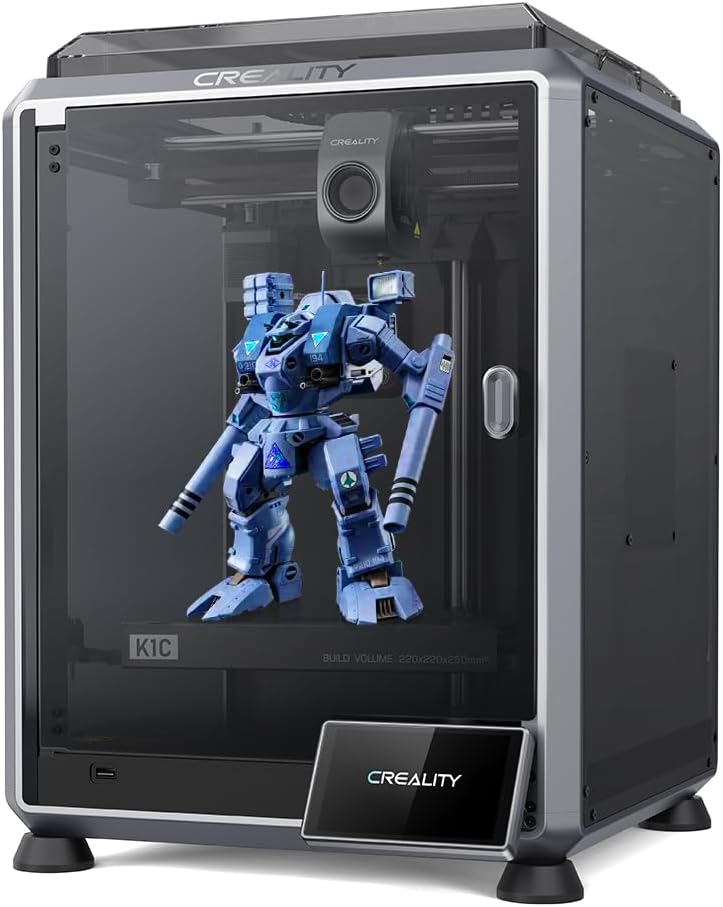
The Creality K1C stands out as a budget-friendly option that still manages high-temperature printing effectively. With a nozzle capable of reaching 300°C and a hardened steel-stipped copper nozzle, it handles carbon fiber and other abrasive filaments well.
We may earn a commission when you buy through this link, at no additional cost to you.
Its direct extruder ensures reliable feeding, which is crucial for stiff high-temperature materials that might otherwise jam. The AI camera adds value by detecting failures early, saving time and material during long engineering prints.
Although it lacks a fully heated chamber found in more expensive units, users can add an enclosure to improve results with materials like ABS. This flexibility makes it accessible for those wanting to start with engineering prints without a large investment.
This printer is ideal for hobbyists and professionals on a budget who need raw capability for tough materials. Its speed and ease of use make it a practical choice for rapid prototyping.
The hardened nozzle and direct drive system are specifically built to resist wear from carbon or glass fiber fillers.
Capable of printing at 600mm/s, it significantly reduces lead times for large or multiple prototype parts.
We may earn a commission when you buy through this link, at no additional cost to you.
The FLASHFORGE Creator 5 Pro is designed for industrial-grade applications where consistency and material flexibility are paramount. With an active chamber heated to 65°C, it minimizes warping for materials like ABS, ASA, PC, and Nylon far better than standard enclosures.
We may earn a commission when you buy through this link, at no additional cost to you.
Its four independent extruders allow for true multi-material and multi-color printing without color mixing or purging waste. This feature alone justifies the investment for users who frequently switch between materials or require soluble support structures.
Safety is also a priority with the HEPA13 filtration system that captures volatile particles and odors. This makes the machine suitable for office or classroom environments where air quality matters during long high-temperature prints.
Professional users needing robust, reliable performance should consider this model. While expensive, it offers features that streamline complex workflows and ensure high-quality results consistently.
Independent toolheads eliminate the need for purging, saving material and time during color or material switches.
Maintaining 65°C actively allows even the most challenging engineering plastics to print without deformation.
We may earn a commission when you buy through this link, at no additional cost to you.
The Bambu Lab P1S offers an enclosed design that improves performance for advanced filaments like ABS and ASA. It provides a good balance of speed and reliability for users needing more than basic open-frame capabilities.
We may earn a commission when you buy through this link, at no additional cost to you.
Its speed reaches up to 500mm/s with strong acceleration, allowing fast turnaround on prototypes. The automatic bed leveling and quick setup mean less time tweaking and more time printing high-temperature materials.
Users should note that while it handles ABS and ASA well, it is not recommended for carbon fiber reinforced polymers due to nozzle wear considerations. This distinction helps set realistic expectations for material compatibility.
For those wanting a plug-and-play experience with solid engineering capabilities, the P1S is a reliable mid-tier choice. It bridges the gap between hobbyist and professional needs effectively.
This design keeps heat in the print area, improving adhesion and reducing warping for temperature-sensitive plastics.
Lightning-fast printing speeds let users focus on design iteration rather than waiting for prints to finish.
We may earn a commission when you buy through this link, at no additional cost to you.
While primarily marketed as a beginner model, the Bambu Lab A1 offers precise high-speed printing with full auto-calibration. It is an excellent entry point for those learning to work with advanced materials in a safe and user-friendly environment.
We may earn a commission when you buy through this link, at no additional cost to you.
Its active flow rate compensation ensures smooth prints, which helps when adjusting settings for different filament types. The quiet operation and intuitive touchscreen make it approachable for classrooms or shared workspaces.
However, the open frame design limits its effectiveness with high-temperature materials compared to enclosed competitors. Users may need to add an enclosure or work carefully with sensitive materials to achieve best results.
For beginners wanting to graduate to engineering prints, this printer provides a solid foundation. Its ease of use reduces frustration and encourages experimentation.
Automatic processes handle Z-offset and bed leveling so users can skip manual steps and start printing.
Active noise canceling allows this printer to sit on a desk without disrupting nearby work or conversations.
We may earn a commission when you buy through this link, at no additional cost to you.
The FLASHFORGE AD5X introduces Independent Filament System technology for multi-color printing without swapping spools. It supports high-temperature printing up to 300°C, making it versatile for engineering materials alongside standard plastics.
We may earn a commission when you buy through this link, at no additional cost to you.
Its fully automatic leveling and high-speed capabilities simplify workflows, while the large build volume accommodates bigger projects. The ability to print multiple colors simultaneously opens new creative possibilities for functional prototypes.
However, the optional enclosure means users must ensure environmental stability when printing high-temperature parts. Without it, warping may occur with materials like ABS unless external covers are added.
This model appeals to makers wanting multi-color options without breaking the bank. It balances versatility with performance well for intermediate users.
Up to four colors print at once, removing manual swaps and reducing print time for complex models.
Printing up to 600mm/s ensures fast production times for prototypes or functional end-use parts.
We may earn a commission when you buy through this link, at no additional cost to you.
The Anycubic Kobra S1 Max targets large-scale engineering projects with a massive build volume and a powerful hotend capable of 350°C. This makes it ideal for printing functional prototypes like helmets or automotive parts.
We may earn a commission when you buy through this link, at no additional cost to you.
Its active heated chamber reaching 65°C ensures stability for high-temperature materials like PC and PA, reducing warping issues common in large prints. The CoreXY structure maintains precision even at high speeds.
Real-time AI monitoring adds peace of mind during long runs, detecting failures early to save material. This feature is particularly valuable when investing hours into large complex parts.
For professionals requiring large format capabilities with thermal control, this printer delivers strong value. It supports a wide range of materials effectively.
A 350mm build cube allows printing of big components in one piece, reducing assembly time and complexity.
Maintaining 65°C ensures consistent results for engineering plastics that require stable thermal environments.
We may earn a commission when you buy through this link, at no additional cost to you.
The Flashforge AD5X emphasizes speed and multi-material printing with its IFS system and CoreXY motion. It supports up to 300°C nozzles for engineering materials, while vibration compensation ensures quality at high speeds.
We may earn a commission when you buy through this link, at no additional cost to you.
Wireless monitoring via dual-band Wi-Fi allows remote control and HD camera streaming, which is handy for monitoring long prints. The magnetic PEI plate ensures good adhesion and easy part removal.
Users planning to use high-temperature materials should consider adding an enclosure to minimize air drafts that can affect layer adhesion. This small addition can significantly improve print success with materials like ABS.
This model suits users needing quick multi-color prototypes and engineering support. It combines speed with flexibility for modern makers.
This feature maintains precision even at max speed, reducing ghosting and improving surface quality.
Dual-band Wi-Fi and HD camera allow users to track prints remotely without being tied to the machine.
We may earn a commission when you buy through this link, at no additional cost to you.
The Snapmaker U1 offers a unique approach to multi-material printing with independent toolheads and a fast changer that eliminates purging waste. It supports engineering materials like ABS and PC within its design parameters.
We may earn a commission when you buy through this link, at no additional cost to you.
With up to 5X faster multi-material printing compared to traditional systems, it saves time and material. The software simplifies setup, making complex multi-material jobs accessible even to beginners.
While the price is high, the reduction in waste and time for multi-material parts can offset costs over time. It is particularly useful for functional parts needing mixed properties.
For those needing true multi-material capability without purging, this system is a standout. It prioritizes efficiency and creativity in engineering workflows.
Tool swapping without purging drastically reduces filament waste, making multi-material printing economically viable.
Switching between materials instantly enables complex prints with flexible supports or multi-hardness components.
We may earn a commission when you buy through this link, at no additional cost to you.
The FLASHFORGE Creator 5 Pro emphasizes industrial reliability with a near-zero waste system and active chamber heating. Its design minimizes purging waste while delivering fast 600mm/s printing speeds.
We may earn a commission when you buy through this link, at no additional cost to you.
Dual HEPA filtration and active airflow create a safe environment for high-temperature printing, capturing fumes effectively. This makes it suitable for shared workspaces needing robust safety controls.
While complex to set up, the benefits in efficiency and safety justify the learning curve. It supports high-stakes engineering projects requiring precise material control.
For professional settings prioritizing safety and speed, this machine offers strong industrial value. It is a comprehensive solution for advanced manufacturing.
Tool changing without purging eliminates massive waste, saving material costs and improving efficiency.
This system ensures safe air quality, critical when printing engineering plastics that release volatile particles.
We may earn a commission when you buy through this link, at no additional cost to you.
Selecting the right printer for high-temperature materials requires evaluating several critical factors to ensure reliability and print quality.
A closed enclosure is vital for materials like ABS and ASA because it retains heat, preventing warping caused by temperature fluctuations. Look for fully enclosed models with optional or built-in chamber heating for best results.
Prioritize printers with active chamber heating if you frequently print polycarbonate or nylon to minimize warping.
Most high-temperature filaments require nozzle temperatures above 250°C, so a machine supporting at least 300°C is recommended for versatility. Check if the nozzle is hardened to resist wear from abrasive filaments.
Ensure the nozzle can reach 300°C and is made of hardened steel or similar durable materials for longevity.
Active chamber heating maintains a stable environment, which is essential for large prints that are prone to curling. A 65°C chamber temperature can make a difference when using materials like PC or PA.
Opt for printers with active chamber heating if you plan to print large engineering parts.
High-temperature printing often involves large prototypes or functional parts, so a larger build volume provides flexibility. Consider your largest typical print size when selecting the machine dimensions.
Choose a build volume that accommodates your largest anticipated parts in one piece.
CoreXY systems are preferred for high-speed printing as they maintain stability and reduce vibrations at higher velocities. This helps ensure precision even with stiff high-temperature filaments.
Look for CoreXY or rigid belt systems to maintain accuracy at high speeds.
Check manufacturer recommendations for supported materials, particularly regarding carbon fiber or glass fiber fillers. Some printers have specific extruders or nozzles designed to handle abrasives without clogging.
Verify the printer officially supports abrasive filaments if you plan to use them regularly.
High-temperature printing can produce fumes, so HEPA filtration and air quality systems are valuable for indoor use. These features protect your workspace and health during long print jobs.
Prioritize models with HEPA filtration if you print in shared spaces.
Advanced calibration features like flow compensation and vibration control simplify tuning for different materials. These tools help achieve consistent results without tedious manual adjustments.
Choose printers with automated calibration to streamline your engineering workflows.
Always preheat the bed and chamber sufficiently before starting a print to ensure proper adhesion. For materials like ABS, a bed temperature between 100°C and 110°C is common to prevent warping.
Monitor the print progress through the camera or software to catch any filament jams early, especially with high-temperature polymers. Adjust cooling fans appropriately to maintain interlayer strength while managing overhangs.
Clean the nozzle regularly with brass wire or specialized tools to prevent clogs from carbon fiber or glass fiber materials. Schedule routine checks of the enclosure seals to maintain stable temperatures over time.
The Bambu Lab P2S Combo and FLASHFORGE Creator 5 Pro are excellent choices due to their enclosed chambers and adaptive airflow systems. They maintain the necessary heat to prevent warping while offering reliable performance.
No, most consumer printers do not support polycarbonate without a high-temperature chamber. Only printers with active chamber heating above 60°C and nozzle limits near 300°C are suitable for PC.
Use a fully enclosed printer with a heated chamber to maintain stable temperatures throughout the print. Ensure the bed is level and apply an adhesive like glue stick or PEI surface for better part adhesion.
Active heating is highly recommended for materials like polycarbonate or nylon but optional for ABS or ASA with good insulation. It provides more consistent results for large or detailed engineering parts.
Hardened steel or ruby-tipped nozzles are best for carbon fiber filaments to prevent wear. Check if your printer supports abrasive filament options to avoid clogging issues.
Fine-tune cooling settings to balance layer adhesion with overhang support. Keep the enclosure sealed and the room temperature stable to reduce thermal stress on the material.
The top picks in this guide offer a range of solutions for engineering-grade printing, from budget-friendly options to industrial machines with active chamber heating. Each model brings unique strengths to handle materials like ABS, ASA, PC, and Nylon.
Prioritize enclosure quality, nozzle temperature, and material compatibility based on your specific projects. A printer with robust safety and calibration features will save time and reduce failures over the long term.
Prices and availability can fluctuate, so check current listings before making your final decision. Investing in the right machine will pay off in reliable and repeatable results.