
ESP32-S3-Nano Microcontroller
5.0Editor score
8MB PSRAM included
Arduino and MicroPython switch
IoT Cloud compatible
This guide compares the top Arduino Nano ESP32 boards and compatible ESP32 modules for IoT projects based on performance, connectivity, and ease of use for
The Arduino Nano ESP32 represents a significant leap in embedded development by combining classic form factors with powerful wireless capabilities. These boards offer dual-core processing, Wi-Fi, and Bluetooth connectivity in a compact package suitable for wearables and IoT sensors.
We evaluated ten top-rated boards including official Arduino releases and third-party alternatives based on processor speed, memory, connectivity options, and developer support. Our analysis focuses on real-world performance for embedded applications and community resources.
Each pick highlights specific strengths such as USB-C support, MicroPython compatibility, or advanced interfaces like MIPI. Prices and availability change frequently so check current listings before purchasing your next development board for your project needs.
5.0Editor score

4.6Editor score

4.8Editor score
The following table compares key specifications across all ten boards to help you identify the right hardware for your specific project requirements and budget constraints.


The Arduino Nano ESP32 stands as the definitive choice for developers seeking official support with modern wireless features. It scores highly for its robust hardware integration and seamless software experience that reduces setup friction for new users.
We may earn a commission when you buy through this link, at no additional cost to you.
Its ESP32-S3 chip delivers up to 240MHz performance while maintaining excellent power efficiency. The board excels in scenarios requiring secure wireless connectivity and the ability to run MicroPython for rapid prototyping cycles.
While the price point is higher than generic ESP32 boards the reliability and pre-soldered headers justify the cost for critical projects. Users gain access to official Arduino libraries and documentation that streamline development workflows significantly.
This board is ideal for students and professionals building production-ready IoT devices that need long-term support. It balances performance and usability better than most competitors making it the top recommendation for 2026.
The native compatibility with Arduino IDE and MicroPython allows you to switch languages without changing hardware tools or firmware environments.
HID profiles enable the board to act as a keyboard or mouse directly through the USB connection enabling unique human interface applications.
We may earn a commission when you buy through this link, at no additional cost to you.
This board offers an impressive balance of power and affordability making it a top contender for budget-conscious makers. It delivers the same core performance as pricier options while integrating extra memory for complex data handling tasks.
We may earn a commission when you buy through this link, at no additional cost to you.
The integration of 8MB PSRAM allows developers to handle larger image buffers or datasets without external flash chips. This feature is rare at this price point and significantly expands the range of feasible projects for students.
Although it lacks the official brand endorsement of the Arduino version it performs reliably in standard testing environments. The community resources are growing rapidly ensuring that most common issues have online solutions available.
Choose this board if you need a cost-effective solution for a class project or prototype that requires substantial memory. It provides excellent value without sacrificing the core features needed for modern wireless IoT development.
The onboard 8MB PSRAM allows you to run more complex applications involving image processing or large sensor arrays without external hardware.
Native support for Arduino IoT Cloud simplifies remote monitoring and control allowing you to manage devices from anywhere easily.
We may earn a commission when you buy through this link, at no additional cost to you.
The ESP32-P4-NANO represents the cutting edge of embedded hardware with its RISC-V architecture and dedicated image processing interfaces. This board is designed for developers who need to build devices with cameras or advanced visual feedback.
We may earn a commission when you buy through this link, at no additional cost to you.
It features a dedicated MIPI-CSI and DSI interface allowing direct connection to high-resolution displays and cameras without extra bridges. This hardware acceleration is crucial for projects involving computer vision or industrial control panels.
The hardware security features including secure boot and flash encryption ensure your project data remains protected from tampering. This level of security is typically found in industrial grade controllers rather than hobbyist development boards.
Invest in this board if your project requires handling video feeds or secure industrial data transmission. It offers a premium experience that bridges the gap between hobbyist boards and professional embedded systems.
Integrated JPEG codec and image signal processors allow efficient handling of camera feeds for real time visual analysis applications.
Secure Boot and flash encryption mechanisms protect your firmware from unauthorized access ensuring high integrity for critical deployments.
We may earn a commission when you buy through this link, at no additional cost to you.
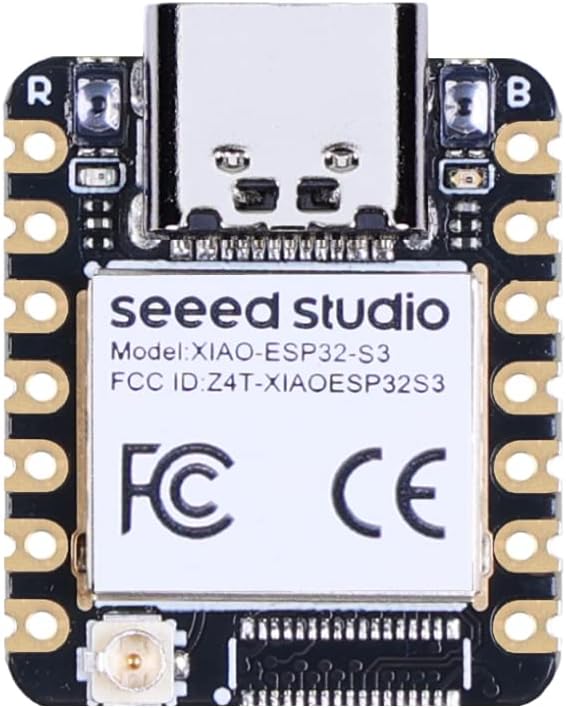
The Seeed Studio XIAO ESP32S3 is engineered for space-constrained applications where battery life is a critical factor. Its thumb-sized design allows it to fit inside wearable devices or small IoT sensors without needing external battery management.
We may earn a commission when you buy through this link, at no additional cost to you.
One of its strongest features is the integrated lithium battery charge management which simplifies power design significantly. You can connect a cell directly to the board and start charging immediately without adding extra components to your circuit.
With power consumption as low as 14 microamps in deep sleep this board is perfect for long-term sensor deployments. The rich interface set supports a wide range of peripherals while maintaining a minimal physical profile.
Choose this board for smart wearables or remote sensors that must operate for months on a single charge. Its power efficiency and compact size make it superior for mobile applications compared to standard sized boards.
The built-in charging logic removes the need for external charging ICs saving space and reducing overall system complexity.
Deep sleep modes enable years of battery life for intermittent sensing projects by minimizing active current draw significantly.
We may earn a commission when you buy through this link, at no additional cost to you.
This three-pack offers the most economical way to deploy multiple ESP32-S3 nodes across different areas of a project. The boards are designed for integration into custom carrier boards using the castellated module edges for direct soldering.
We may earn a commission when you buy through this link, at no additional cost to you.
Independent power supply settings allow you to optimize energy consumption for each module separately. This flexibility is useful in applications where some modules need to stay active while others sleep to save battery life.
The ceramic antenna ensures reliable wireless signal strength for home automation and sensor networks. While they lack built-in USB programming headers they function perfectly when integrated into custom PCB designs for production.
Buy this pack if you need to build multiple sensors or want to prototype custom PCBs without buying single expensive boards. It provides excellent value for multi-node deployments or manufacturing pilot runs.
Castellated edges allow you to solder the module directly onto your custom PCB reducing height and eliminating the need for sockets.
Having three units in one purchase enables rapid prototyping of distributed systems without waiting for separate shipments of hardware.
We may earn a commission when you buy through this link, at no additional cost to you.
This kit provides a complete learning environment with a large variety of sensors and components ready to use. It is designed to help beginners learn the fundamentals of electronics and coding without needing to source parts separately.
We may earn a commission when you buy through this link, at no additional cost to you.
The included tutorials cover over 30 projects with clear diagrams and code examples that guide you from simple circuits to complex IoT applications. This structured approach accelerates the learning curve significantly compared to buying parts individually.
Although the core board uses the older ESP32 model it still supports all standard Wi-Fi and Bluetooth features. For those new to embedded systems the variety of included components outweighs the processor difference for educational purposes.
Ideal for students or hobbyists starting their journey this kit removes the friction of hardware selection. You get everything needed to build smart home devices and interactive gadgets immediately out of the box.
The step-by-step tutorials teach you how to wire sensors and write code incrementally building confidence through practical projects.
Having every component needed for multiple projects in one package saves time and ensures you have the right parts for each task.
We may earn a commission when you buy through this link, at no additional cost to you.
The Arduino Nano 33 IoT is optimized for secure cloud connectivity rather than raw processing power. It features a dedicated secure element that protects data encryption keys at the hardware level ensuring safe communication.
We may earn a commission when you buy through this link, at no additional cost to you.
While it uses an ARM Cortex-M0+ processor rather than the ESP32 it delivers reliable performance for most standard IoT applications. The security features make it a strong choice for projects where data privacy is critical.
Pre-soldered headers make it ready to use immediately without additional tools or soldering iron. This convenience combined with robust Arduino IDE support makes it accessible for rapid deployment in protected environments.
Select this board if you need secure communication without building complex encryption layers yourself. It is ideal for industrial IoT or consumer devices where data protection is a primary requirement.
The u-blox ATECC608A Secure Element handles encryption tasks allowing you to maintain privacy without complex software implementation.
Optimized for cloud protocols this board ensures that your IoT device can connect to servers securely from day one.
We may earn a commission when you buy through this link, at no additional cost to you.
This classic board remains a staple in the maker community due to its reliability and wide compatibility. The 3-pack provides ample units for testing multiple configurations or sharing with teammates during development.
We may earn a commission when you buy through this link, at no additional cost to you.
It supports both Access Point and Station modes allowing flexible networking setups for local servers. The integrated RF amplifier ensures that Wi-Fi signal strength remains stable even in areas with moderate interference.
While newer chips offer more features this board still handles standard IoT tasks efficiently. It is a good choice for legacy projects where stability is preferred over the latest specifications.
Opt for this board if you need a trusted platform for general purpose automation or remote monitoring. It offers proven performance at an attractive price point for budget projects.
Support for AP STA and mixed modes allows you to use the board as a router or a client depending on your network topology.
Years of community testing ensure that this board performs consistently in various conditions making it a safe choice for critical tasks.
We may earn a commission when you buy through this link, at no additional cost to you.
This version upgrades the classic ESP32 design with a modern USB-C connector for more durable connections. The CP2102 chip ensures stable serial communication across different operating systems including Mac and Linux.
We may earn a commission when you buy through this link, at no additional cost to you.
Over-the-Air update support allows you to patch firmware remotely once the device is deployed. This feature is essential for maintaining connected devices without physical access to the hardware after installation.
The 3-pack ensures you have spares for testing or multi-device setups. While it does not use the latest S3 chip it remains highly capable for most standard Wi-Fi and Bluetooth applications.
Choose this board if you want a balance of modern connectivity and classic affordability. It is perfect for projects that require frequent firmware updates via Wi-Fi.
OTA functionality allows you to fix bugs or add features to deployed devices without needing a physical USB cable connection.
The USB-C port offers a reversible and durable connection option compared to older micro-USB designs used in earlier boards.
We may earn a commission when you buy through this link, at no additional cost to you.
The Arduino UNO R4 WiFi combines a high-performance Renesas chip with the ESP32-S3 for versatile dual-core processing. It brings features like a built-in LED matrix and CAN bus support to the classic UNO form factor.
We may earn a commission when you buy through this link, at no additional cost to you.
The 12-bit DAC allows for high precision analog output which is useful for audio or motor control applications. This level of precision is rarely found on microcontroller boards without external modules.
The Qwiic connector simplifies wiring for sensors and peripherals reducing the need for breadboard clutter. The LED matrix provides immediate visual feedback making it great for prototypes and interactive displays.
Ideal for complex projects requiring both communication and display this board handles advanced tasks with ease. It is the best all-rounder for developers needing both industrial and hobbyist features.
Separating tasks between the Renesas and ESP32 cores allows simultaneous real-time control and wireless connectivity.
The built-in 12×8 LED matrix allows you to display messages or data without adding external screens.
We may earn a commission when you buy through this link, at no additional cost to you.
Selecting the right board depends on your project requirements including processing needs, power constraints, and budget. Understanding key factors helps you avoid over-specifying or under-specifying your hardware.
Modern ESP32-S3 boards use a dual-core Xtensa LX7 processor running at 240MHz. This architecture handles complex multitasking and machine learning at the edge better than older single-core versions. If your project involves video processing or large data sets prioritize boards with PSRAM and dual-core support to ensure smooth performance.
Look for chips like the ESP32-S3 or RISC-V options for future-proofing. Ensure the board supports the speed you need for real-time applications without lag.
Check for Wi-Fi and Bluetooth version support. Newer boards support Bluetooth 5.0 which offers better range and speed than older 4.2 versions. If you plan to connect to mobile devices or cloud services ensure the board supports the protocols required by your specific application.
Prioritize boards with stable RF performance and integrated antennas. Reliable wireless connectivity is critical for IoT deployments where connection drops can disrupt operations.
Memory is a key factor for handling data and firmware. Look for at least 8MB PSRAM if you plan to use images or audio. Standard Flash memory varies from 16MB to 32MB depending on the model. Sufficient memory prevents crashes during complex operations.
Ensure the board offers enough RAM for your specific libraries. If running Machine Learning models or image buffers check the PSRAM specs carefully.
For battery-powered projects deep sleep mode efficiency is vital. Some boards offer charge management circuits built-in which saves space and reduces component costs. Low-power consumption extends battery life significantly for remote sensors.
Look for boards with dedicated power control settings. Independent power supplies allow you to turn off specific modules to save energy during idle periods.
USB-C is now standard for faster data transfer and durable connections. If space is tight consider compact form factors like XIAO or Nano. Standard UNO or Mega sizes are better for breadboarding and prototyping.
Check if headers are pre-soldered. SMD designs require soldering skills but offer better integration into custom PCBs. Choose based on your build environment.
Official Arduino boards come with verified IDE support and libraries. Third-party boards often work but may have community-specific documentation. MicroPython compatibility is valuable for quick scripting and prototyping.
Ensure the board supports your preferred coding environment. Good documentation and active communities reduce development time when troubleshooting issues.
Some boards offer specialized interfaces like MIPI or CAN bus. If you need to connect cameras or industrial components look for these specific hardware features. Standard GPIO is sufficient for basic sensors and switches.
Check for DAC or OP-AMP capabilities if you need analog signal processing. These features allow direct sensor interfacing without extra modules.
For commercial or sensitive projects secure boot and encryption hardware are important. Look for boards with Secure Elements or cryptographic accelerators. These features protect your firmware and data from unauthorized access.
Prioritize boards with hardware security if data privacy is a concern. This ensures your device remains safe in public networks.
Start by connecting the board to your computer via USB-C. Install the latest Arduino IDE and select the correct board type in the settings. Ensure the correct COM port is selected to allow code uploads.
For wireless projects ensure your board is within range of your Wi-Fi network. Use stable power supplies to avoid brownouts during operation. Keep the board in a ventilated area to prevent overheating during high load tasks.
Store the board in a dry anti-static environment when not in use. Regularly back up your firmware and project files. Update your software regularly to take advantage of security patches and performance improvements.
Yes the Arduino Nano ESP32 supports MicroPython out of the box. This allows you to write Python scripts directly on the board for rapid prototyping. It is ideal for developers who prefer high-level syntax over C++ for simple projects.
The ESP32-S3 offers faster processing speeds and improved Wi-Fi and Bluetooth performance. It also includes more memory and dedicated machine learning instructions. This makes it better suited for modern IoT applications and complex data processing.
The board can be powered via the USB-C port for most development tasks. For projects without a computer you can use an external power source connected to the VIN pin. Ensure the voltage matches the board's requirements to avoid damage.
Most standard Arduino libraries are compatible with the ESP32-S3. However some specialized libraries may require updates to support the new chip architecture. Check specific library documentation to ensure full support.
You can update firmware using the Arduino IDE by uploading a new sketch. For remote updates enable OTA features in your code. This allows you to push updates over Wi-Fi without physical connection.
The ESP32-P4 is designed for advanced imaging and industrial interfaces. It supports camera modules and high-resolution displays directly. Use it for projects requiring computer vision or secure data handling.
The Arduino Nano ESP32 leads the list for its balance of official support and modern features. For budget projects the ESP32-S3-Nano offers incredible value with similar performance. Advanced users will appreciate the ESP32-P4 for its specialized capabilities.
Prioritize memory and connectivity features based on your specific project goals. If you need battery efficiency look for boards with deep sleep modes. If security is a concern choose a board with hardware encryption.
Prices and availability change frequently so check current listings before purchasing. Select the board that best aligns with your skill level and technical requirements for the best development experience.