
Verifone VX520
3.5Editor score
Contactless and EMV Ready
Ethernet and Dial Options
Proven Reliable Hardware
Discover the top card readers for vending machines in 2026. This guide compares features, security, and connectivity to help you choose the right cashless
Modern vending operations demand reliable cashless payment solutions that accept various card types and mobile wallets. A good reader ensures secure transactions while providing real-time data insights for better machine management.
We evaluated ten leading card readers based on compatibility, security certifications, connectivity options, and ease of installation. Our analysis focuses on devices that support EMV, NFC, and magnetic stripe payments effectively.
Each selection highlights specific strengths such as durability, telemetry capabilities, or budget-friendly options. Prices and availability change frequently, so check current listings before making your final purchasing decision.
3.5Editor score
3.8Editor score

4.0Editor score
The following table provides a side-by-side comparison of key specifications for all ten evaluated card readers. Use this overview to quickly identify which device matches your specific connectivity and security needs.


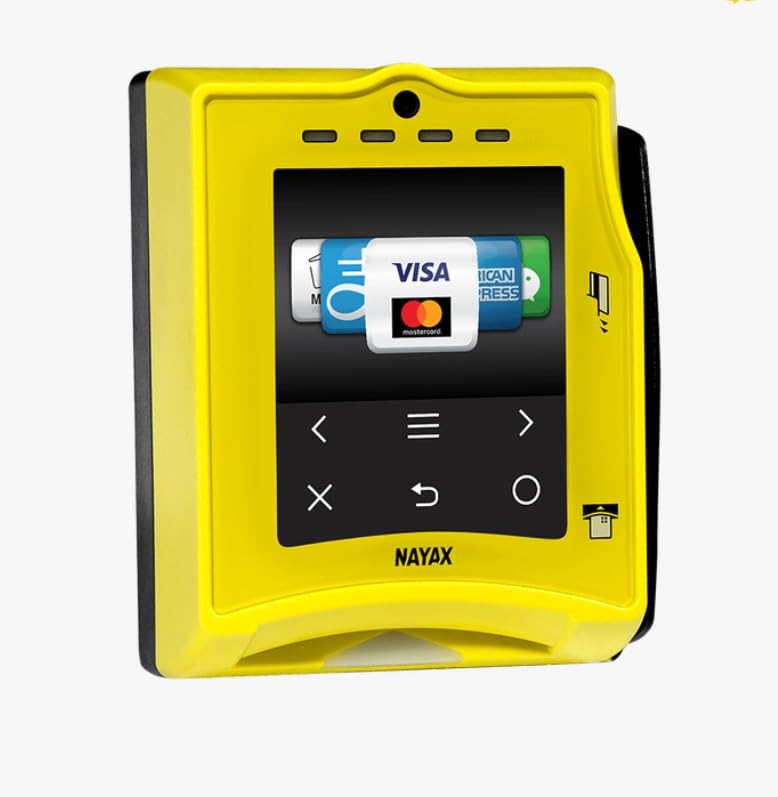
The VPOS Touch leads our list as the top card reader for vending machines due to its comprehensive payment acceptance and robust telemetry features.
We may earn a commission when you buy through this link, at no additional cost to you.
It accepts EMV chip cards, NFC contactless payments like Apple Pay, and magnetic stripe cards seamlessly. The included 4G LTE antenna ensures instant connectivity without extra setup.
While it offers advanced features like Nayax management suite integration, users must ensure their vending machine supports MDB or Pulse protocols for proper operation.
Operators seeking a reliable, secure, and fully connected cashless solution will find this device the most complete option available in the market today.
Its ability to handle multiple payment types reduces friction at the point of sale and increases customer transaction rates.
Operators can monitor inventory levels and sales data in real time, allowing for quicker restocking and better route planning.
We may earn a commission when you buy through this link, at no additional cost to you.
The Nayax VPOS Touch model offers a distinct advantage with its customizable 2.4-inch color LCD touchscreen and voice prompt capabilities.
We may earn a commission when you buy through this link, at no additional cost to you.
Built with Dragontrail glass and an IP55 rating, this device withstands harsh environments better than standard readers while supporting loyalty programs.
Although pricing is competitive, the lack of visible rating data suggests users should verify current performance metrics before purchasing.
Ideal for arcade or high-traffic locations where visual engagement and durability are critical for successful cashless transactions.
The color display and voice prompts guide users through transactions, reducing confusion and increasing successful payment completion rates.
Shock detection and water resistance ratings make this unit suitable for outdoor or high-use indoor installations.
We may earn a commission when you buy through this link, at no additional cost to you.
The Generic card reader provides a straightforward solution for operators needing basic cashless functionality without complex feature sets.
We may earn a commission when you buy through this link, at no additional cost to you.
Users must follow the included instruction sheet to activate the device, which can take up to ten business days after submission.
Once activated, it supports standard payment types and remote management, making it suitable for smaller or simpler vending setups.
This option works well for those prioritizing ease of use and cost-effectiveness over advanced marketing or telemetry capabilities.
While activation takes time, the simple instructions ensure that even non-technical operators can get started without assistance.
Priced competitively, this reader offers essential payment acceptance for operators launching new machines on a limited budget.
We may earn a commission when you buy through this link, at no additional cost to you.
The Symcode Multi-Function reader is designed primarily for technical users needing card data access for membership or check-in systems.
We may earn a commission when you buy through this link, at no additional cost to you.
It supports USB magnetic reading, chip cards, and contactless NFC, but functions strictly as a reader without encoding capabilities.
While compatible with various software via HID or passive modes, its lower rating suggests potential integration complexities for some users.
Best suited for developers or specialized kiosks requiring flexible card reading rather than standard vending payment processing.
Support for multiple chip standards and HID mode allows integration with custom software solutions beyond standard vending machines.
As a read-only device, it cannot write data to cards, limiting its use to data retrieval scenarios.
We may earn a commission when you buy through this link, at no additional cost to you.
The Verifone VX520 offers a cost-effective way to accept modern payment methods including Apple Pay and EMV chip cards.
We may earn a commission when you buy through this link, at no additional cost to you.
With both dial and Ethernet options, it adapts to various connection environments, making it versatile for different machine locations.
While it is an older model, its compliance with modern standards ensures security and compatibility with current payment networks.
Budget-conscious operators looking for a trusted brand name without the expense of newer touchscreen models will appreciate this choice.
Full EMV compliance ensures that transactions meet the latest security standards, reducing liability for the operator.
The availability of Ethernet connectivity allows for stable, wired internet connections where wireless signals may be weak.
We may earn a commission when you buy through this link, at no additional cost to you.
This card reader stands out by offering write capabilities for memory chips and PSAM cards alongside standard magnetic stripe reading.
We may earn a commission when you buy through this link, at no additional cost to you.
It includes a software development kit and user guide, which are essential for integrating it into custom POS or check-in systems.
While suitable for membership tracking, the need for APDU commands for CPU cards requires technical knowledge to implement fully.
Ideal for applications needing data recording on cards, such as loyalty programs, rather than simple payment processing only.
The ability to write to cards enables dynamic loyalty tracking or access control features that standard readers cannot support.
Users should be prepared to utilize the provided SDK to ensure smooth communication between the reader and host software.
We may earn a commission when you buy through this link, at no additional cost to you.
The E-seek M-260 is a premium device designed for environments requiring strict ID verification alongside standard card reading.
We may earn a commission when you buy through this link, at no additional cost to you.
It reads magnetic stripes and 2D barcodes on government IDs, making it ideal for secure access or age-restricted vending.
With dual interface connectors and USB smart cable inclusion, it offers flexible installation options for kiosks and secure machines.
While expensive, this reader provides unmatched security for high-value transactions or regulated environments requiring authentication.
The combination of ID card and barcode scanning allows for multi-factor authentication to prevent unauthorized access or purchases.
Side and bottom interface connectors allow the device to be mounted securely in tight kiosk spaces without cable obstructions.
We may earn a commission when you buy through this link, at no additional cost to you.
The VP3350 Card Reader provides a compact solution for vendors needing a portable device that fits easily into smaller spaces.
We may earn a commission when you buy through this link, at no additional cost to you.
It supports contactless payments and magnetic stripe cards while meeting PCI P2PE compliance for secure transaction encryption.
However, users must establish a new merchant account before shipment, which adds a step to the initial setup process.
Best for operators needing a small, reliable payment terminal for temporary setups or mobile vending events.
Its compact size and included stand make it easy to position on countertops or small kiosks without taking up much room.
The ability to handle surcharges gives operators flexibility in managing transaction costs associated with credit card payments.
We may earn a commission when you buy through this link, at no additional cost to you.
The MTMS15 Multi-Technology Card Reader is engineered for environments requiring higher security through multi-factor authentication like PIN entry.
We may earn a commission when you buy through this link, at no additional cost to you.
Its open architecture solution allows developers to customize applications while supporting mobile NFC and networked real-time data updates.
Although it offers advanced flexibility, the complexity may be unnecessary for simple cashless vending scenarios.
Ideal for secure facilities or specialized vending systems where user verification is as important as the payment itself.
Combining card reading with PIN entry adds a critical layer of protection against unauthorized use or fraud.
Real-time network updates ensure that transaction data is immediately available for monitoring and reporting purposes.
We may earn a commission when you buy through this link, at no additional cost to you.
The Bluetooth X6BT VIP Card Reader offers wireless connectivity and cross-platform support, making it highly adaptable for mobile and desktop use.
We may earn a commission when you buy through this link, at no additional cost to you.
It supports reading and writing on all three magnetic tracks and includes free software for Windows, macOS, iOS, and Android.
This flexibility makes it useful for field operations where wired connections are impractical or unavailable for the reader.
Best for users needing a versatile, portable solution for card data management or specialized tracking outside typical vending contexts.
Bluetooth enables easy pairing with mobile devices, allowing for transactions in remote locations without cabling.
Support for multiple operating systems ensures that it can be integrated into almost any existing software environment.
We may earn a commission when you buy through this link, at no additional cost to you.
Selecting the right card reader involves balancing payment methods, security, connectivity, and durability. Below are key factors to consider.
Ensure the reader accepts EMV chip cards, NFC contactless payments like Apple Pay, and magnetic stripes. Modern transactions increasingly rely on tap-and-go methods.
Check for compatibility with specific wallet types required by your customer base to maximize transaction success.
Look for PCI DSS compliance and EMV Level 1 or 2 certifications. These standards protect sensitive customer data and reduce liability during transactions.
Secure encryption like P2PE ensures that card data remains protected throughout the transaction process.
Consider whether cellular, Ethernet, dial, or Bluetooth is best for your location. Cellular is often easier for remote machines, while wired options offer stability.
Confirm that the chosen connection type matches your network infrastructure to avoid installation delays.
Verify the reader supports your machine protocol such as MDB or Pulse. Mismatched protocols will prevent the reader from controlling transactions correctly.
Review your existing machine specifications before purchasing a new payment module.
Remote monitoring capabilities allow you to track sales, inventory, and transaction errors from anywhere. Real-time alerts help address issues before they impact revenue.
Platforms offering detailed dashboards provide valuable insights for optimizing route planning and inventory levels.
Vending environments can be harsh, so look for durable materials like impact-resistant glass or water resistance ratings like IP55.
A sturdy build ensures the device withstands daily use and reduces replacement costs over time.
Plug-and-play units save time during setup compared to devices requiring complex wiring or software configuration.
Evaluate whether you need professional installation support based on the technical requirements of the model.
Compare the hardware cost alongside ongoing merchant account fees and transaction charges. Some devices require specific providers that may affect total cost.
Factor in long-term expenses to ensure the investment remains cost-effective as your business grows.
Start by reviewing the included documentation to understand activation requirements. Some devices need a merchant account or network settings before they process transactions.
Ensure the reader is securely connected to the vending machine using the appropriate cables such as MDB harnesses or USB interfaces.
Regularly inspect the device for physical damage or dirt accumulation to maintain reliable performance. Clean the screen or card slot gently with recommended materials.
Yes, most payment processors require a merchant account to authorize transactions and settle funds. Some models may bundle this service, while others require you to set one up independently.
EMV readers process chip cards inserted into the slot, offering enhanced security through encryption. NFC readers accept contactless payments by tapping the card or phone against the device.
Most modern readers require some form of connectivity to verify transactions securely. Offline modes may exist but often store transactions until a connection is restored.
Installation typically takes 30 to 60 minutes for plug-and-play models. Complex setups requiring custom wiring or software integration may take longer depending on technical skills.
Not universally. Compatibility depends on the machine's communication protocol like MDB or Pulse. Always check your machine's specifications before purchasing.
Many readers include mobile apps or web portals that display sales data and inventory status in real time. This telemetry helps operators manage routes efficiently.
Check connectivity and power sources first. Most manufacturers offer support or replacement warranties, so keep your purchase documentation accessible for troubleshooting.
Yes, NFC-enabled readers support mobile wallets. Look for explicit compatibility with Apple Pay, Google Pay, and Samsung Pay when selecting a model.
Our top picks include the VPOS Touch for its all-in-one features, the Verifone VX520 for budget-conscious buyers, and the E-seek M-260 for premium security needs.
Prioritize security certifications, connectivity options, and protocol compatibility to ensure seamless integration with your existing vending infrastructure.
Check current pricing and availability on the provided links before purchasing, as hardware costs and merchant terms can change over time.