
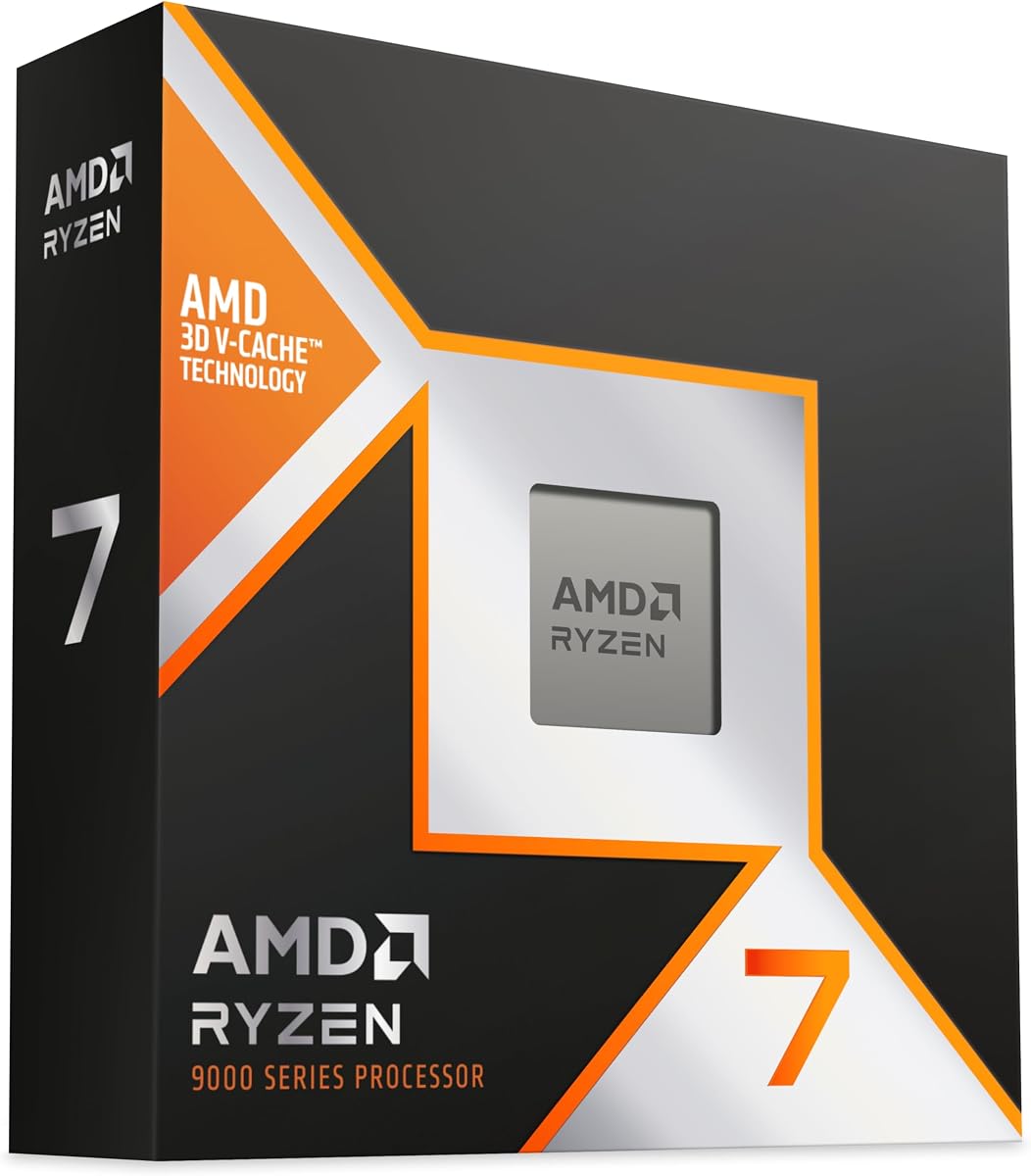
AMD Ryzen 7 9800X3D
4.8Editor score
96MB L3 cache
Up to 5.2 GHz clock
Zen 5 architecture
This guide compares the top CPUs for Machine Learning workloads in October 2026, evaluating performance and efficiency for AI development and training.
Selecting the right CPU for machine learning is crucial for developers who need reliable performance and efficiency. Modern AI tasks demand processors that can handle complex computations while maintaining stability during long training sessions and inference workloads.
We have evaluated the top ten processors available today based on core count, cache size, architecture efficiency, and AI-specific features. Our analysis focuses on how each unit handles parallel processing, memory bandwidth, and integration with GPU ecosystems for seamless workflows.
Each pick highlights specific strengths such as unified memory, cache advantages, or specialized AI accelerators. Note that availability and pricing can fluctuate frequently so always verify current stock and vendor terms before making your final purchasing decision for your workstation.
4.8Editor score

5.0Editor score

4.6Editor score
The following table provides a side by side overview of key specifications and capabilities across all ten models. It helps you quickly identify which processor aligns best with your specific workload requirements and budget constraints.



The NVIDIA DGX Spark 2 Pack stands out as the premier choice for serious machine learning practitioners. With a perfect rating and a desktop supercomputer form factor it delivers enterprise scale AI capabilities directly to your workspace.
We may earn a commission when you buy through this link, at no additional cost to you.
Its Grace Blackwell architecture provides up to 1 petaFLOP of AI performance enabling rapid model fine tuning and inference. The 128GB unified memory per unit allows you to run large models without relying on external cloud resources.
While the cost is significant the ROI in productivity and innovation is clear. It is designed for those who need to prototype and test frequently without waiting on remote resources or dealing with latency issues.
This unit is ideal for enterprises and advanced developers who require secure local testing environments. If you need the highest local performance and flexibility this system sets the new standard for desktop AI.
Fine tune models locally with 128GB unified memory to maintain data privacy and speed.
Seamless integration of the full NVIDIA AI software stack simplifies development workflows.
We may earn a commission when you buy through this link, at no additional cost to you.
AMD Ryzen 7 9800X3D offers a compelling balance of performance and value. Rated highly for its efficiency and speed this processor excels in tasks requiring quick data access and multitasking capabilities.
We may earn a commission when you buy through this link, at no additional cost to you.
Built on Zen 5 technology with Next Gen 3D V-Cache it delivers a significant IPC uplift. The 96MB L3 cache ensures that data is readily available reducing bottlenecks in memory intensive workflows.
While it lacks the massive core count of higher end units its power efficiency makes it a smart choice for developers who need reliability without excessive heat generation. It works well with existing AM5 setups.
This CPU is perfect for those building a cost effective workstation for preprocessing and data management. If you prioritize thermal performance and clock speed over raw core count this is a strong contender.
The Zen 5 architecture provides a robust uplift in instructions per cycle for faster processing.
Drop in ready for proven Socket AM5 infrastructure simplifies upgrades for existing users.
We may earn a commission when you buy through this link, at no additional cost to you.
The Intel Core Ultra 9 285K delivers elite performance with its 24 cores and threads. Rated well for efficiency it is a top choice for workstations that handle diverse computational tasks daily.
We may earn a commission when you buy through this link, at no additional cost to you.
Its Performance Hybrid Architecture distributes workloads to optimize speed. With clock speeds up to 5.7 GHz and 40MB cache it keeps system response times low even during intensive parallel processing.
While the thermal solution is not included the unlocked nature allows for tuning if you have adequate cooling. It supports PCIe 5.0 ensuring you are ready for future GPU and storage upgrades.
Ideal for professionals needing both raw power and efficiency this CPU fits well in high end builds. If you require a versatile processor for coding rendering and training this model is recommended.
Integrates two microarchitectures to prioritize workloads and distribute tasks for optimal speed.
Support for PCIe 5.0 and 4.0 ensures compatibility with next gen high bandwidth devices.
We may earn a commission when you buy through this link, at no additional cost to you.
This processor is optimized for demanding workflows requiring both gaming and content creation. With 16 cores and a boost clock of 5.7 GHz it handles multitasking and heavy compute tasks with ease.
We may earn a commission when you buy through this link, at no additional cost to you.
Built on Zen 5 architecture it balances performance with thermal management. The Granite Ridge design ensures stable operations during long rendering or training sessions where consistency is key.
While the cost is higher the performance gain over standard models is noticeable. It is suited for users who need significant parallel processing power without compromising on single core speed.
Recommended for creators and developers who need a robust desktop unit. If you value high clock speeds alongside core density this model provides a balanced solution for professional workloads.
Max boost clock up to 5.7 GHz ensures rapid execution of single threaded tasks.
Standard desktop boxed processor form factor simplifies integration into existing chassis.
We may earn a commission when you buy through this link, at no additional cost to you.
The AMD Ryzen 9 9900X is designed for ultra fast performance across multiple domains. With 12 cores and 24 threads it is highly rated for handling complex data pipelines and applications.
We may earn a commission when you buy through this link, at no additional cost to you.
Supporting DDR5 memory speeds up to 5600 it ensures quick data retrieval. The 76MB cache allows for efficient access to frequently used data reducing latency during processing.
While it needs a separate cooler the unlocked status allows for flexibility in tuning. It is an excellent choice for those who want a high end platform with strong future support.
This unit works well for both professional apps and high end entertainment. If you want a processor that handles demanding workloads while maintaining system responsiveness this is a great pick.
Supports DDR5 5600 speeds for significantly faster memory bandwidth and data access.
Ready to support PCIe 5.0 on select motherboards for next gen peripheral speed.
We may earn a commission when you buy through this link, at no additional cost to you.
This processor is known for dependable and fast execution of tasks. Rated highly for efficiency it is a solid choice for users who need consistent performance without excessive power draw.
We may earn a commission when you buy through this link, at no additional cost to you.
The 96MB L3 cache ensures that data access is swift. It runs on a reliable 5nm process technology which helps in maintaining stable temperatures during long work sessions.
While the clock speed is moderate the cache and core design compensate effectively. It is a good fit for environments where stability and reliability take precedence over raw peak frequency.
Ideal for general computing and light creative work this unit handles daily tasks with grace. If you need a processor that works hard but runs cool this model is worth considering.
5nm process technology ensures reliable performance with maximum productivity and efficiency.
8MB L2 plus 96MB L3 cache provides excellent hit rate for shorter access times.
We may earn a commission when you buy through this link, at no additional cost to you.
The AMD Ryzen AI Halo is designed specifically for local AI development and inference. With a perfect rating it stands out for its ability to handle intensive AI workloads directly on the device.
We may earn a commission when you buy through this link, at no additional cost to you.
It features 128GB unified memory and an NPU with up to 50 TOPS. This allows developers to run up to 200B parameter models without relying on cloud resources or external servers.
While it runs on Linux the preloaded tools and ROCm support streamline workflows. It is compact yet connected with fast LAN and Wi-Fi options to ensure smooth data transfers.
Best for developers who want a dedicated Linux environment for testing models. If you need to build and validate models locally this platform offers a unique and powerful solution.
128GB LPDDR5x unified memory at 8000 MT/s supports larger AI models efficiently.
AMD XDNA 2 NPU with up to 50 TOPS accelerates local AI tasks significantly.
We may earn a commission when you buy through this link, at no additional cost to you.
The Intel Core i9 14900K is optimized for gaming and demanding workloads. With 24 cores and 32 threads it provides substantial parallel power for developers and creators.
We may earn a commission when you buy through this link, at no additional cost to you.
Its leading clock speed of up to 6.0 GHz delivers rapid responsiveness. This is ideal for applications that rely on single core bursts to improve user experience and frame rates.
While it supports DDR4 and DDR5 platforms users must ensure motherboard compatibility. It is a strong choice for those who need to upgrade their existing systems quickly.
Best for users who need top tier performance for multitasking and real time tasks. If you prioritize clock speed and raw responsiveness this processor is a high performing option.
Leading max clock speed of up to 6.0 GHz gives you smoother responsiveness.
DDR4 and DDR5 platform support cuts your load times and gives you space.
We may earn a commission when you buy through this link, at no additional cost to you.
This processor offers dependable performance for various computing tasks. Rated well for reliability it is a strong contender for users seeking stability in their daily workflows.
We may earn a commission when you buy through this link, at no additional cost to you.
The AM5 socket ensures compatibility with modern motherboards. It features Zen 5 technology which provides efficient processing capabilities for both single and multi threaded tasks.
While specific details are limited it is designed to deliver high performance for desktop users. It is a good choice for those who need a reliable and efficient unit for their build.
Recommended for users looking for a solid base for their workstation. If you need a processor that balances core count and efficiency this model is worth checking out.
Drop-in ready for proven AM5 socket infrastructure ensures future compatibility.
Advanced caching technology improves data access speeds significantly.
We may earn a commission when you buy through this link, at no additional cost to you.
This unit brings supercomputer performance directly to your desk in a compact design. It is rated well for delivering enterprise scale AI capabilities right where you need them.
We may earn a commission when you buy through this link, at no additional cost to you.
The Grace Blackwell architecture provides up to 1 petaFLOP of AI performance. It enables local model fine tuning and analytics while accelerating time to solution for teams.
While it is a specialized unit the integration with the full NVIDIA AI software stack is seamless. It is perfect for those who need to deploy locally or experiment safely.
Best for organizations needing secure high performance environments for AI. If you need to augment cloud resources with local power this model is an exceptional choice.
Enabling enterprise-scale AI and high-performance computing right where you need it.
Empower rapid testing and validation in a secure high-performance setting.
We may earn a commission when you buy through this link, at no additional cost to you.
Choosing the right CPU requires understanding your specific workload needs and system constraints. This section breaks down the key factors to consider when selecting a processor for machine learning projects.
More cores and threads allow for better parallel processing which is vital for data preparation and preprocessing tasks. Look for at least 8 cores for moderate workloads and 16 or more for heavy multitasking.
Prioritize higher core counts if you run multiple jobs simultaneously or process large datasets locally.
Cache size determines how quickly the CPU can access frequently used data. Larger L3 cache reduces latency when dealing with complex model data structures.
Aim for processors with 96MB or more L3 cache to maximize performance in data heavy environments.
Clock speed affects how fast single core tasks are executed. Higher boost clocks improve responsiveness for interactive development and rapid iteration.
Look for processors with max boost speeds above 5GHz to ensure smooth operation during coding sessions.
Modern architectures like Zen 5 and Performance Hybrid designs balance power and performance efficiently. Efficient cores reduce heat and power consumption during long training runs.
Select processors with advanced architectures to maintain stability over extended periods of use.
Unified memory allows the CPU and GPU to share a pool of high bandwidth memory. This is critical for running large models without hitting bottlenecks.
Opt for units supporting at least 128GB unified memory if you plan to run large scale models locally.
Specialized Neural Processing Units offload AI inference tasks from the main CPU and GPU. They improve efficiency and speed for model serving and testing.
Choose units with dedicated NPUs if your workflow relies heavily on local inference and testing.
Ensure the processor matches your motherboard socket and memory type. AM5 and PCIe 5.0 support offer better longevity for future upgrades.
Check chipset compatibility before buying to avoid extra costs for new motherboards or memory.
High performance processors generate significant heat. Proper cooling ensures sustained performance and longevity of the system.
Always budget for a high quality cooler if the processor does not include one.
Install the processor gently and apply thermal paste evenly to ensure proper heat transfer. Secure it in the socket and attach the cooler firmly to prevent overheating during operation.
Regularly update BIOS and drivers to maintain compatibility with the latest software libraries. This helps in keeping the system stable and secure against potential vulnerabilities.
Monitor temperatures using built in tools to catch thermal issues early. Keep the system clean from dust to maintain optimal airflow and cooling efficiency.
For serious machine learning tasks at least 16 cores are recommended to handle parallel processing effectively. However 8 to 12 cores may suffice for smaller datasets and development work.
Yes the CPU prepares data for the GPU. A bottleneck in CPU speed can slow down the overall training process even if the GPU is powerful.
Unified memory is crucial for large models because it allows seamless data sharing between components without bottlenecks reducing latency and improving speed.
Modern architectures like Zen 5 and Intel Hybrid designs offer the best balance of speed and power efficiency for sustained workloads and long training sessions.
While not strictly necessary NPUs help offload inference tasks which can speed up testing and serve models more efficiently in local environments.
Yes gaming CPUs often have high clock speeds and large caches that work well for data preparation and smaller model training tasks.
Larger cache reduces the time the CPU spends fetching data from RAM which is vital for speeding up complex calculations and data processing tasks.
High performance processors often require robust cooling solutions like large air coolers or liquid cooling to prevent throttling and maintain speed.
We reviewed the top ten processors for machine learning ranging from budget efficient units to high end supercomputer systems. Each offers unique strengths based on core count cache and specialized features.
Prioritize unified memory and efficiency if you run large models locally. If you focus on speed and versatility look for high core counts and modern architectures.
Always verify current availability and pricing before purchase. Technology evolves quickly and checking the latest specs ensures you get the best value for your needs.